Earth Remembered
Hand-drawn testimonies of environmental and climate change, gathered in the field — starting in Salento and reaching outward into the rest of the world — each pair holding an emotional childhood place as it was remembered, and as it looks now. Some of what changed is the climate itself; just as often, it is the anthropogenic hand of development, tourism, farming, or a city’s growth.
terra memoranda · every drawing is one witness; together they draw one earth in change
Remembered, twice over: a journey back through the memories and emotions a place still holds — and a reminder, too — to remember the earth, and not look away from what we are doing, and what is happening, to her.
The premise
Twenty-eight drawings, so far. Fourteen starting in Salento, fourteen carried back from elsewhere in the world — deserts, coastlines, rivers, groves, city parks, an old quarry, a derelict fortress wall. No single logic ties them together except the one that matters: someone was asked to draw an emotional place from their childhood, as they remember it, and to draw it again as it looks now.
The aim
The aim is twofold, and neither half is secondary. As a project, it is meant to become a rigorous, citable record of environmental and anthropogenic memory across cultures — testimony gathered in the field, attributable and comparable, useful to research long after any one contributor’s own memory of the place has faded. And as something to sit with, it is meant to make that change felt, not only documented — so that whoever scrolls through it leaves not just informed, but moved enough to remember the earth themselves, and not look away from what is happening to her.
How this began
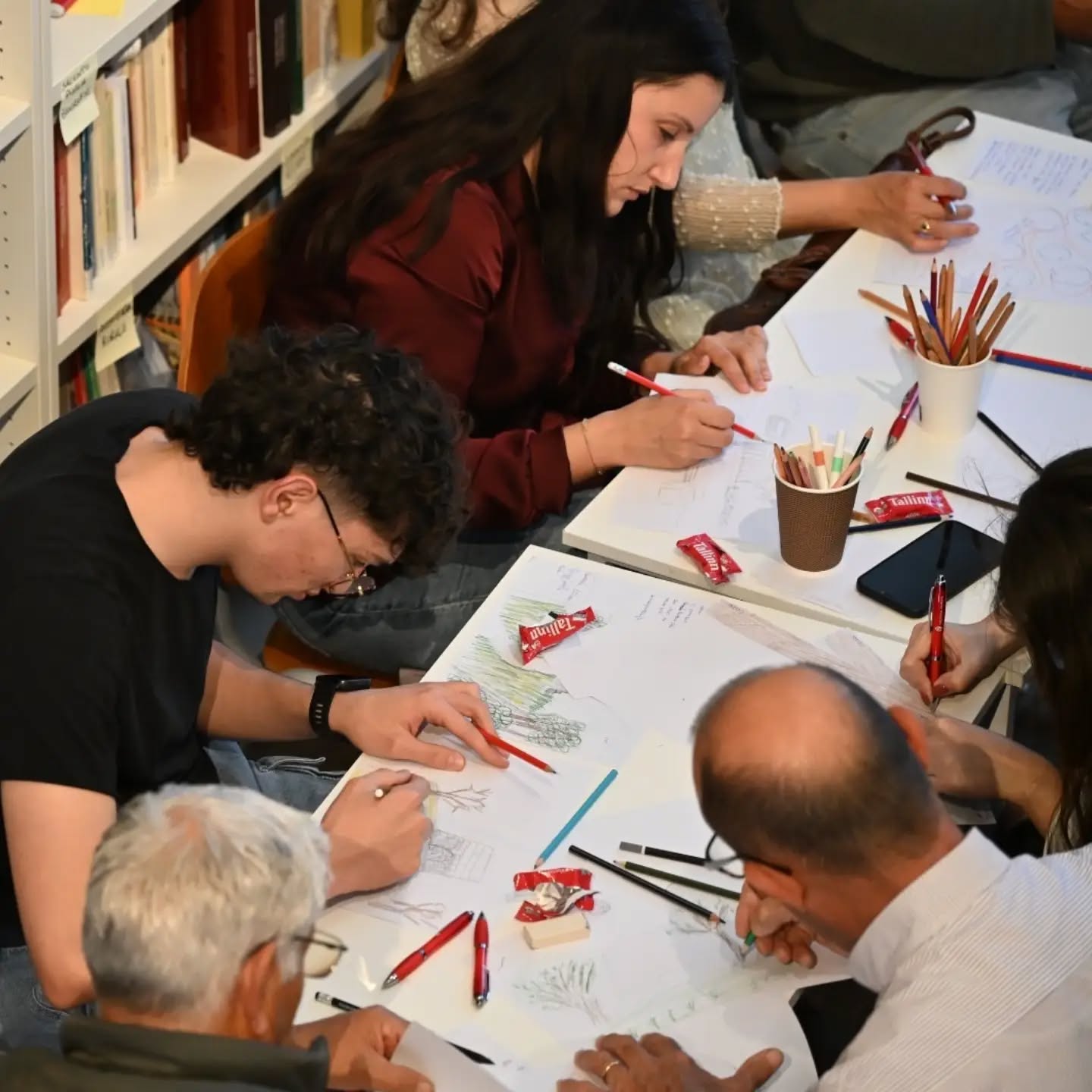
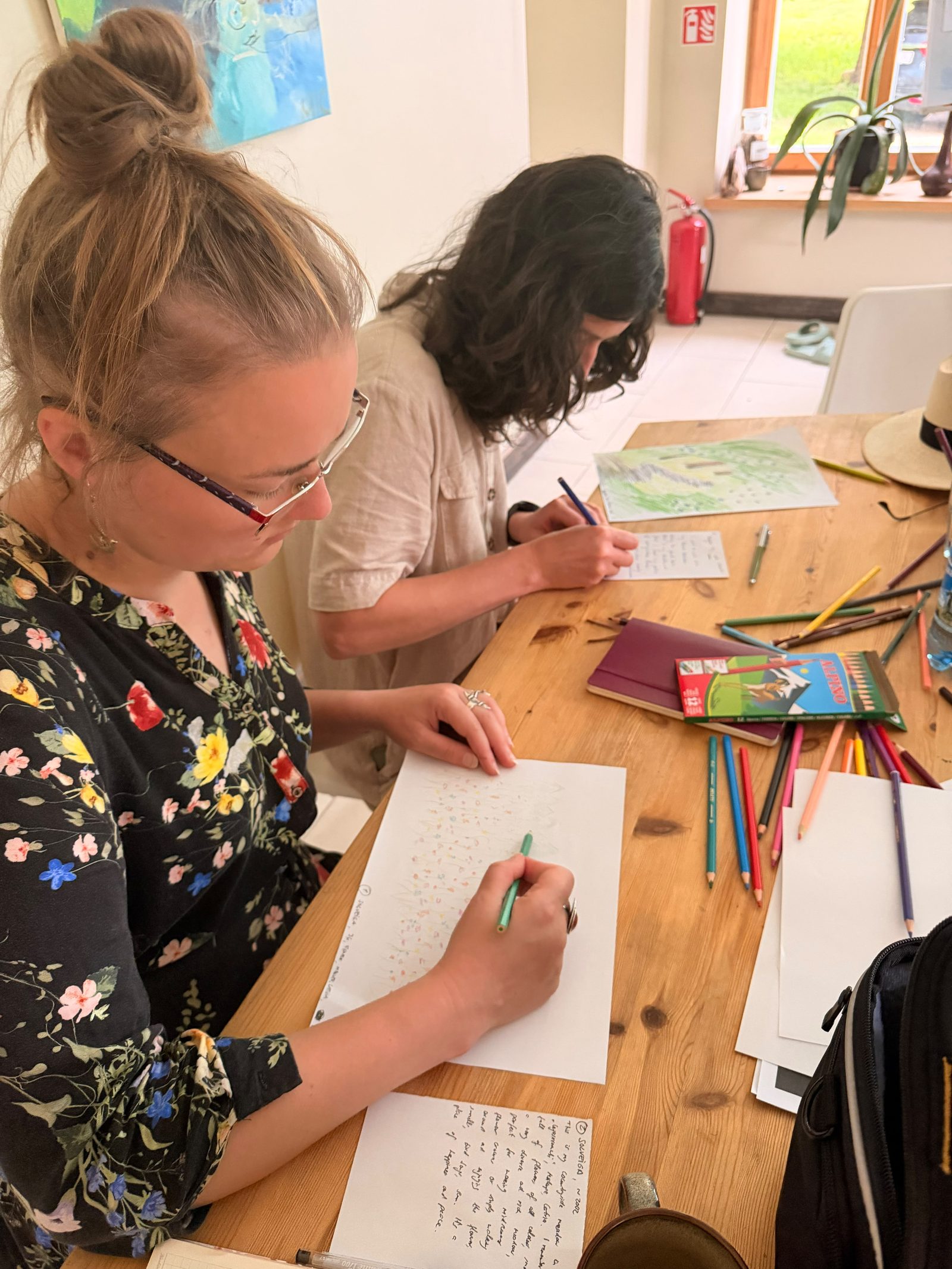
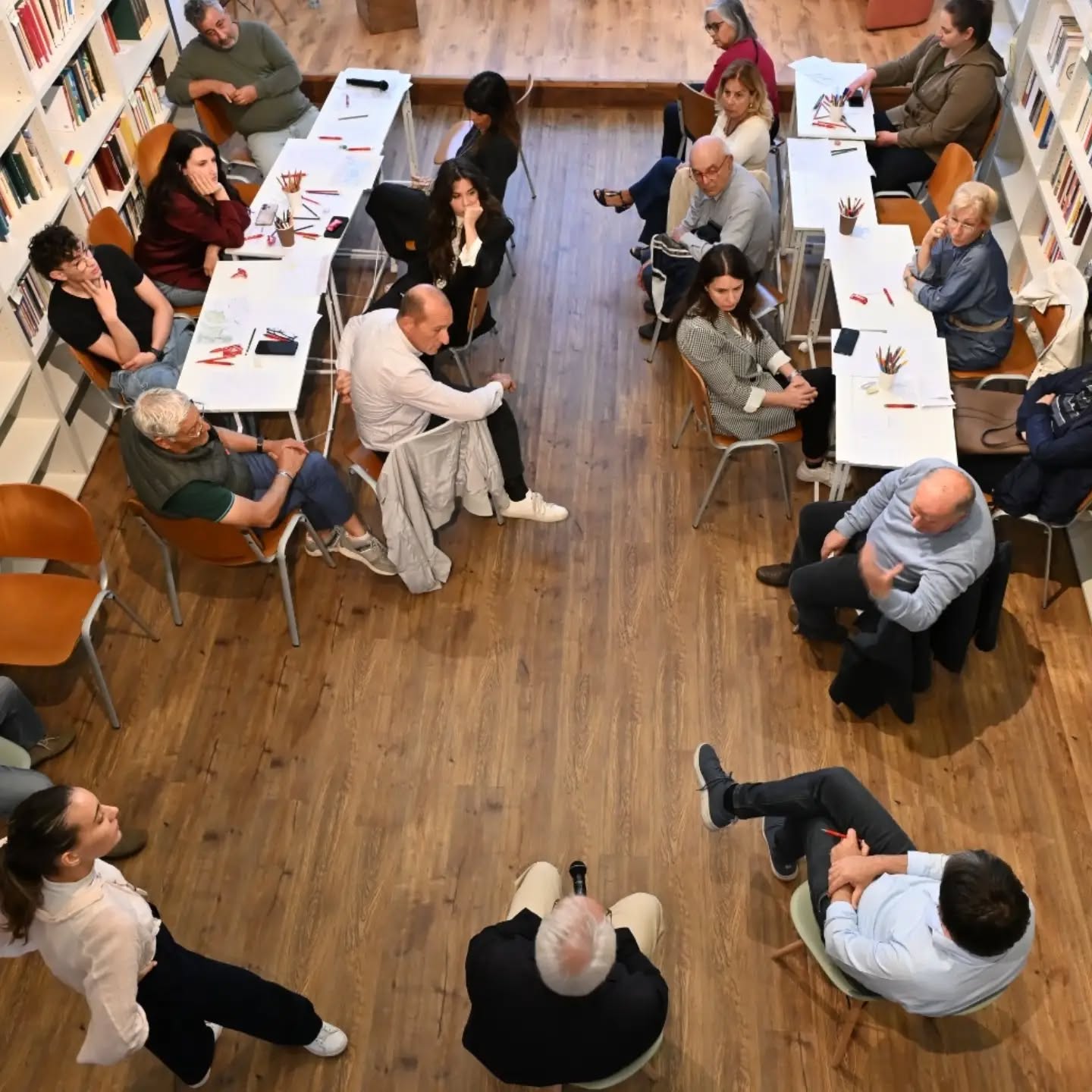
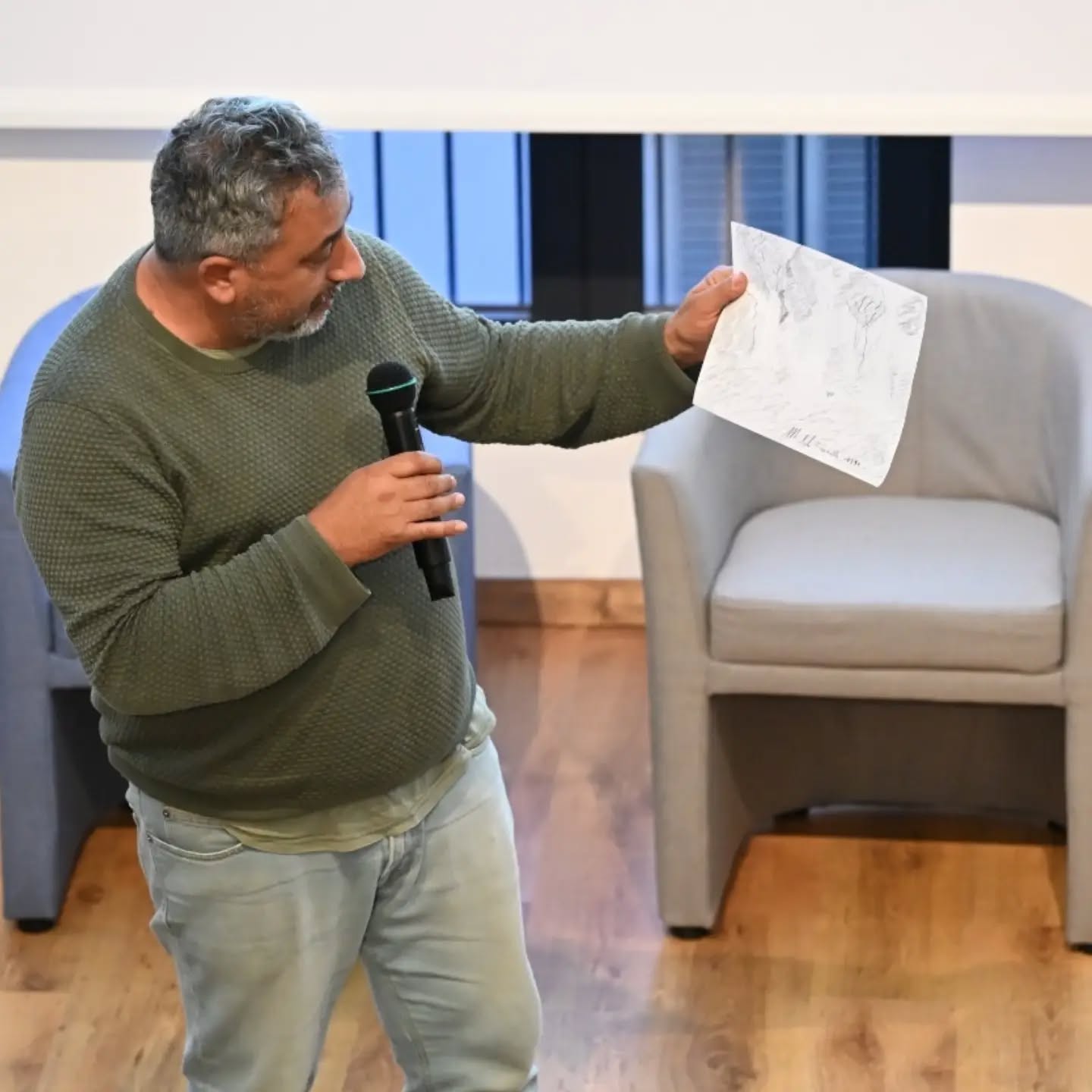
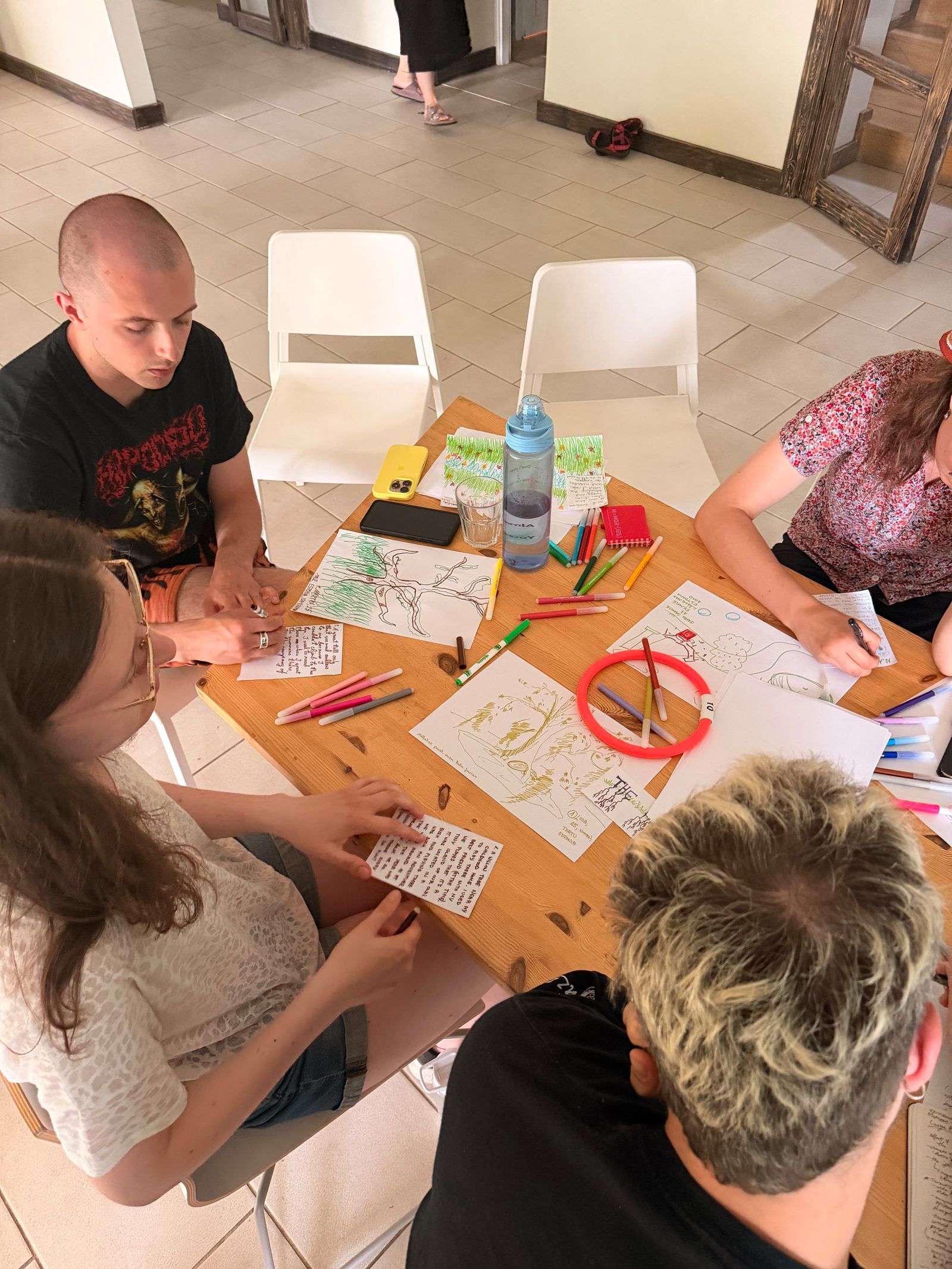
This archive began as a community workshop I ran in Salento, in May 2026, part of my research into how people experience and perceive anthropogenic climate and environmental change. The participatory drawing method itself grew out of that workshop, shaped by feedback from artists, andragogy specialists, psychologists, and anthropologists. It was only once the first drawings were in front of me that I saw how far this could reach beyond Salento — into a living, global archive able to hold the intricate, tangled complexity of change, and make it felt rather than just explained. That shift, from a single person's drawing to a living, collective record, took its cue from Forma Fluens, by Mauro Martino, and the way it lets many individual traces accumulate into one flowing, felt whole.
Why drawing
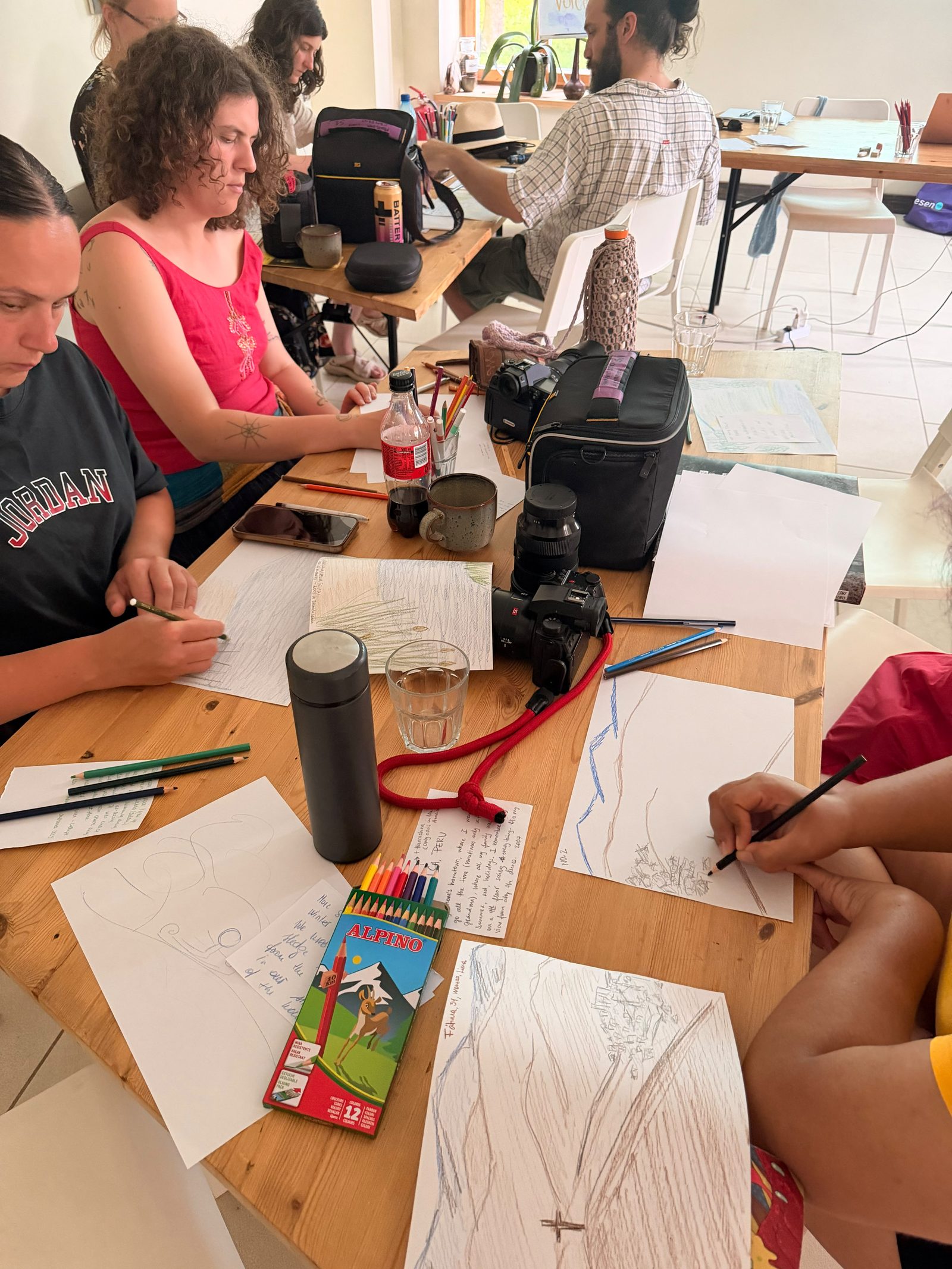
Why drawing, and not a photograph or an interview alone? Partly because it asks something words don’t: for a few minutes, the person drawing becomes a child again, judgment suspended, reaching for a freer and more honest form of expression, without the fear of getting it wrong. Partly because memory itself is rarely made of facts — it’s made of sensations, smells, a particular light, the physical feel of a place — and a drawing can hold onto those without paraphrasing them into something else, showing them closer to how they were actually lived. And partly because setting a childhood place beside its present self, in just a few strokes, makes the emotional shape of the change visible before a single word of testimony is read.
Two states, not three
The archive asks for two states only, then and now, and never a third. Not because the future doesn’t matter, but because it isn’t the archive’s to draw — no one asked to depict a childhood place could draw its future from memory, only from imagination, and this project asks people to be rigorous about exactly one thing: what they actually remember, and what they can actually see today. The future is left open on purpose. It isn’t what the two dimensions record; it’s what they’re meant to provoke — a question raised by holding then and now side by side, rather than an answer supplied: what kind of future do we want, once we’ve looked honestly at what has already changed? The archive doesn’t settle that question. It is built to invite it — discussion and reflection, not conclusions.
Not just climate
What separates then from now is not always the climate changing on its own. Just as often it is what people have built, paved, fenced off, or grown too many of — development, tourism, agriculture, a city’s spread — remaking a place that used to feel wild, hidden, or quiet. This archive holds both drawings side by side, along with the testimony spoken while the pencil moved.
Three kinds of change
Read together, the twenty-eight split roughly three ways. The largest group is built by human hands, deliberately: a vineyard or a meadow replaced by houses and roads, a quarry turned into a parking lot and wakeboarding park, footpaths paved for wider public use, a beach engineered where there wasn’t one before, olive trees felled and replanted, a desert city grown past the water its edges can supply. A second, smaller group is the climate acting more directly — storm surges breaking apart dry-stone walls, a flood reshaping a bay overnight, a wildfire taking a pine grove decades to plant, a river running lower in hotter summers. The rest resist that split altogether: a place simply left to scrub and litter, a family scattered rather than a landscape transformed, a tree still standing while the person who once climbed it just visits less. The drawings, taken as a set, hold as much about how we live now as about how the climate is changing.
How it’s felt
What varies most, though, is not the change itself but how each person holds it. The same distance from a childhood place can read as grief, as relief, or as something closer to indifference. One contributor calls the very same lake “as great as I remember it”; another finds only litter and stopped-short intimacy in a place barely altered at all. A daughter is convinced there must be a good reason the trees are gone; her father, standing in the same forest, is not so sure. More than one says, in effect, that they changed as much as the place did — that the magic left is partly their own to account for. So alongside what changed, the archive keeps asking a second, quieter question: once a place has changed, how do the people who loved it come to feel about that — as loss, as acceptance, as something simply outgrown?
Yesterday & today
All twenty-eight entries are in, drawn and told by the people who hold them. Every entry holds two drawings of the same place — press Yesterday to see it as it was remembered, and Today to see it as it looks now. Press both, on any card, to see what changed.
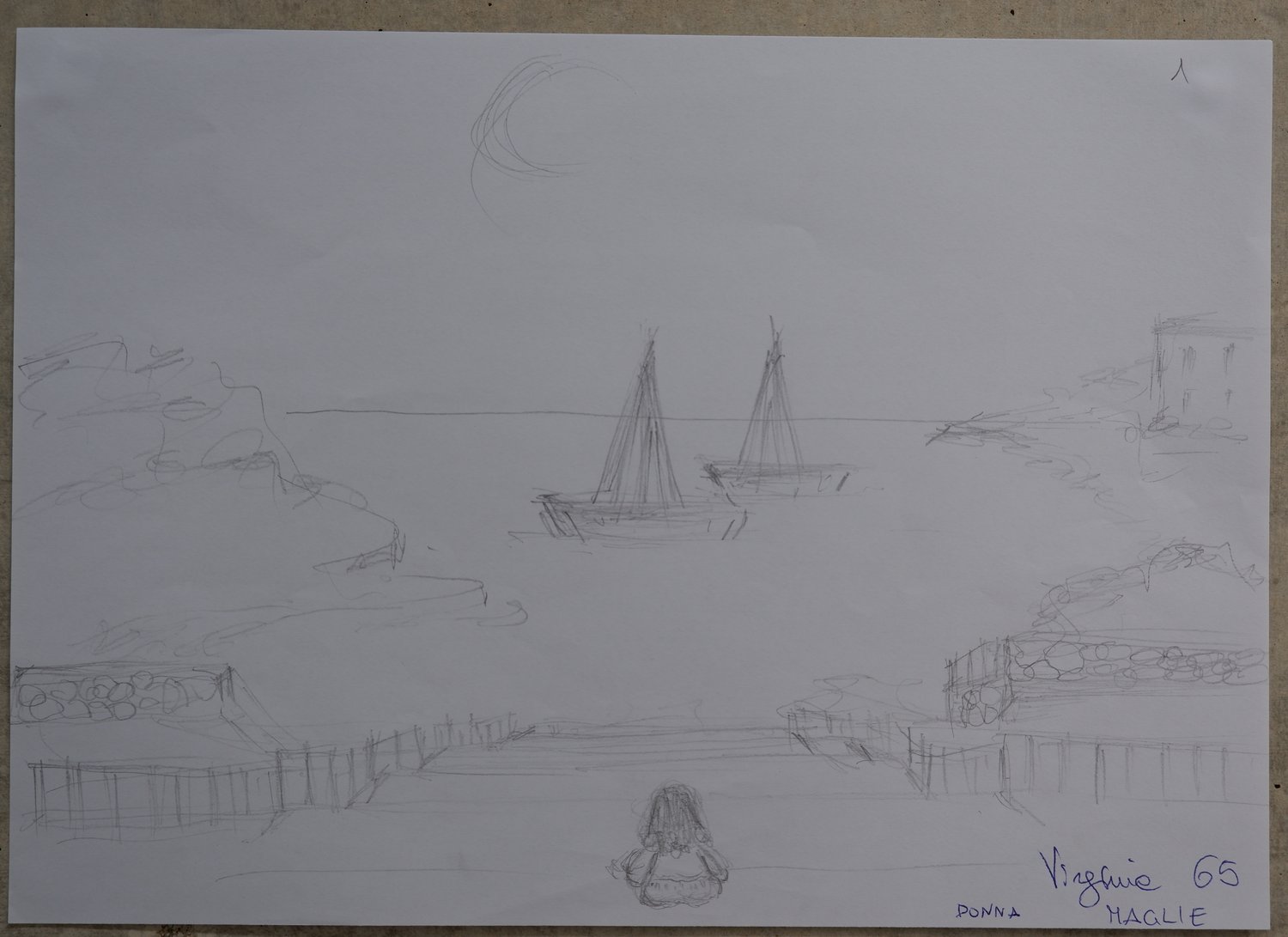
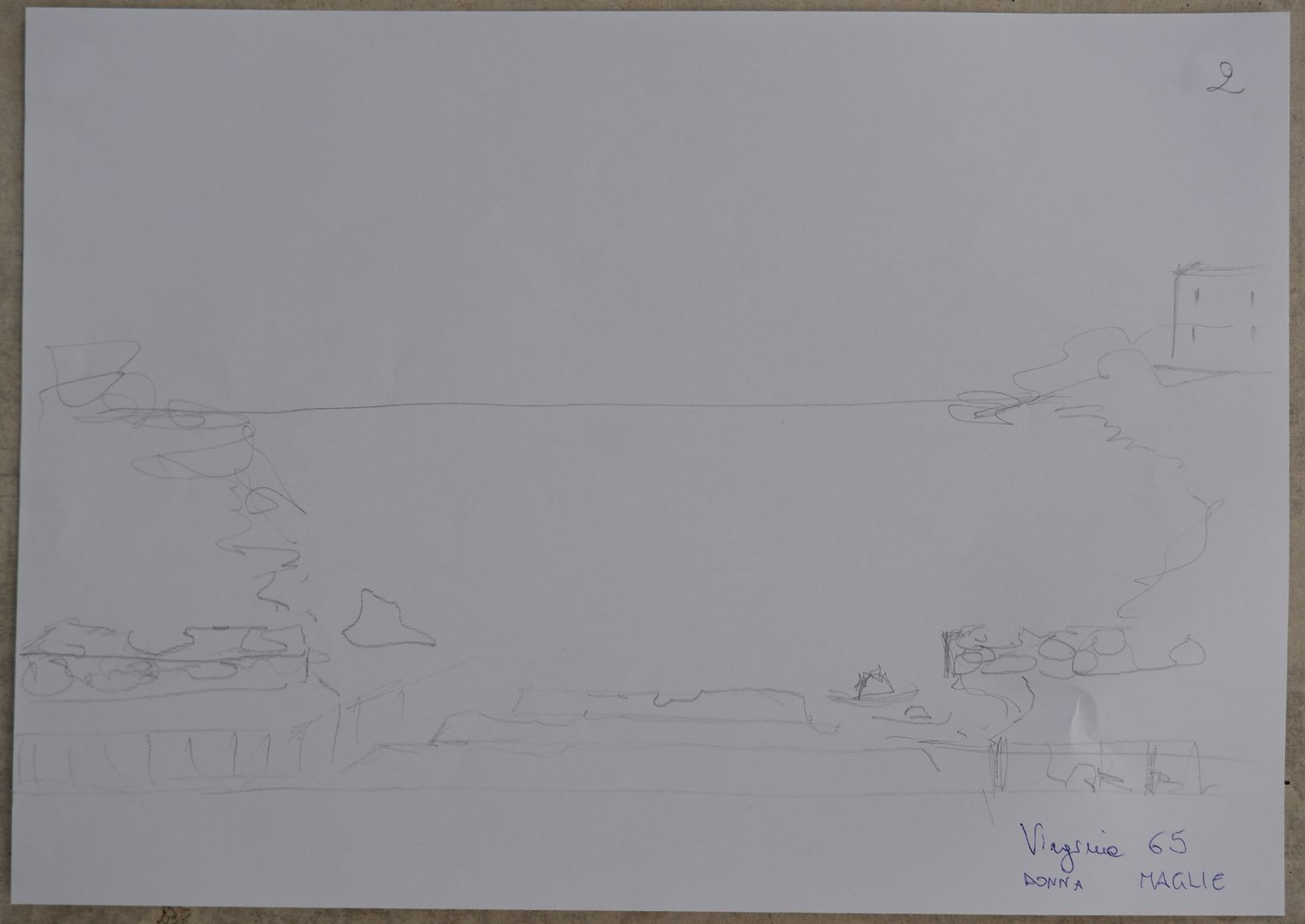
Drawn by Virginia — 65, woman, from Maglie
as remembered
“Il lido dove passo generalmente ogni estate. Mi rifugio lì anche d’inverno, e ritrovo sempre il mio equilibrio.”
“The beach where I usually spend every summer. I take refuge there in winter too, and I always find my balance again.”
Drawn by Franco — 60, man, from Giuggianello
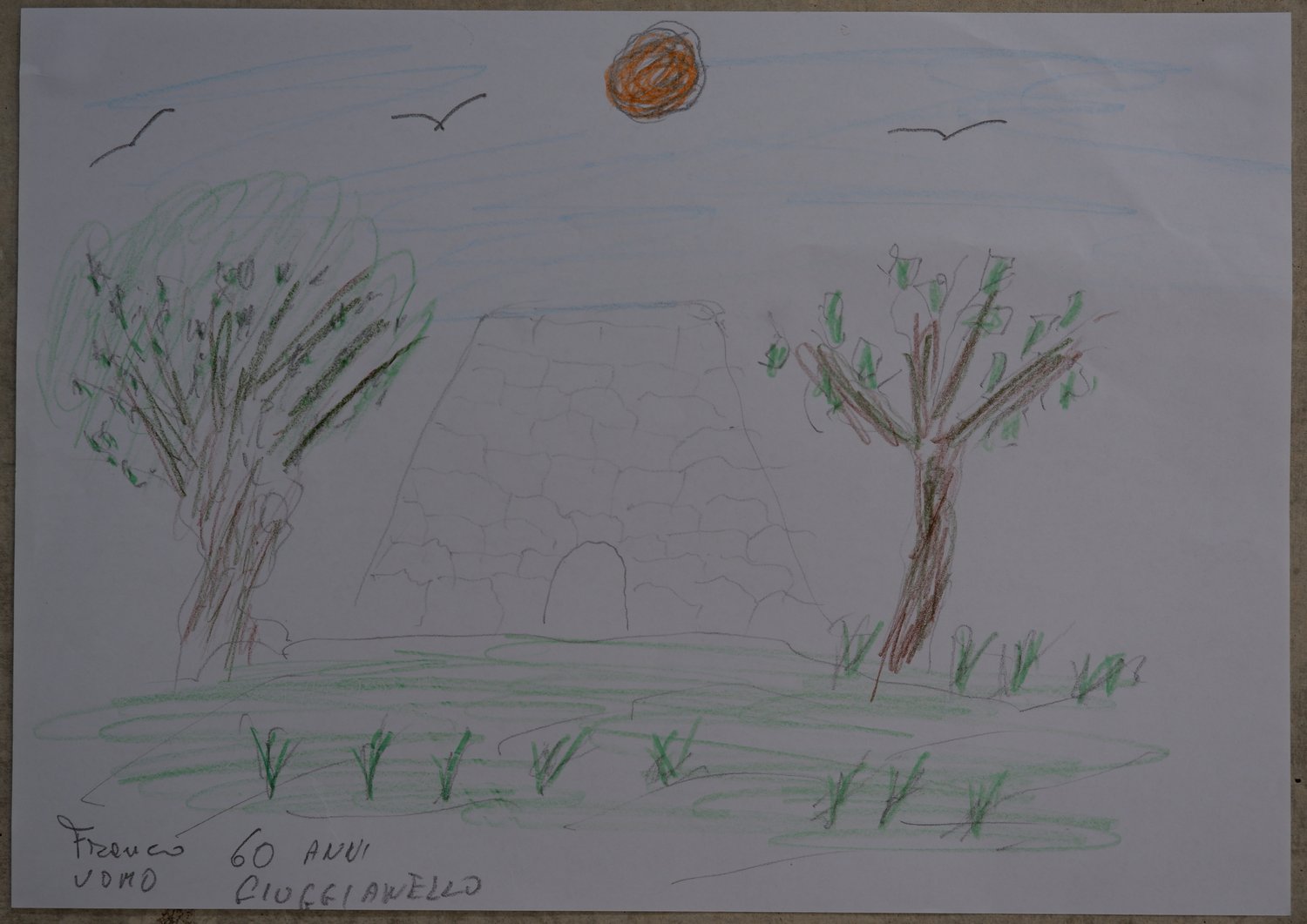
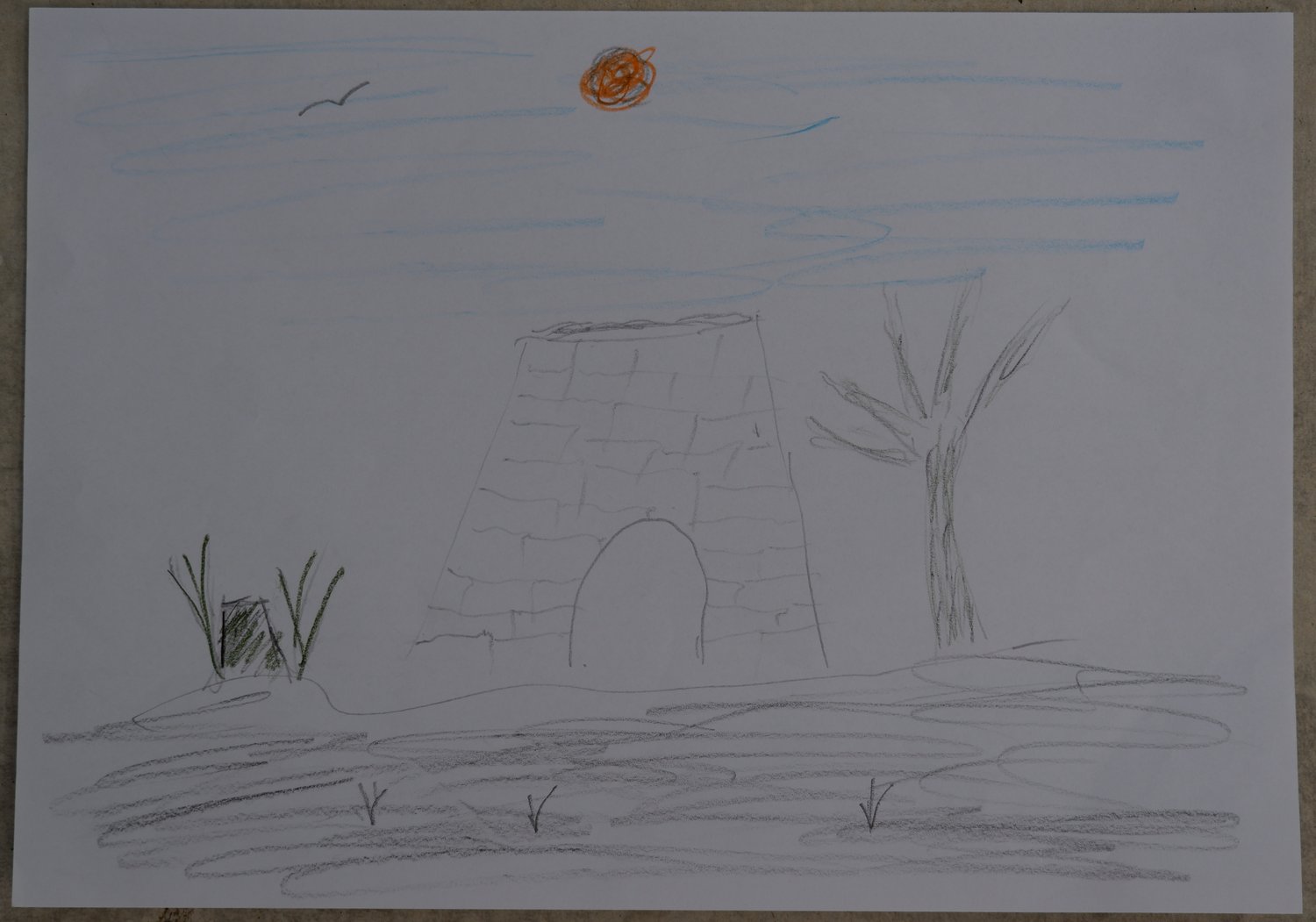
as remembered · the 1980s
“Ho disegnato un ‘paiaru’ sulla Collina delle Ninfe: il posto dove si trascorreva di solito la Pasquetta, da bambini. Anni ’80.”
“I drew a paiaru — a dry-stone field shelter — on the Hill of the Nymphs: the place where we used to spend Pasquetta (Easter Monday) as children, in the 1980s.”
Drawn by Cristoforo — 67, man, from Giuggianello
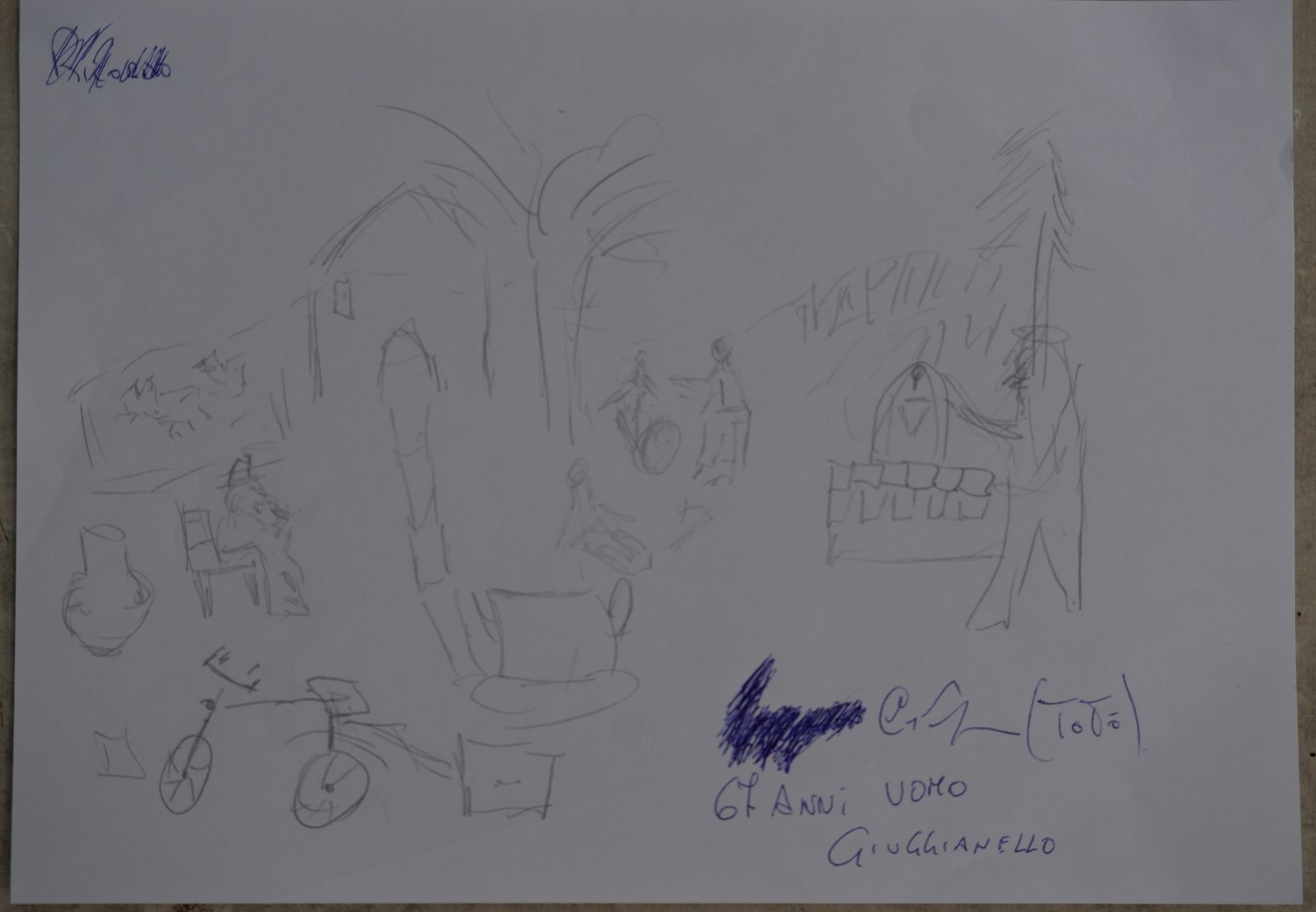
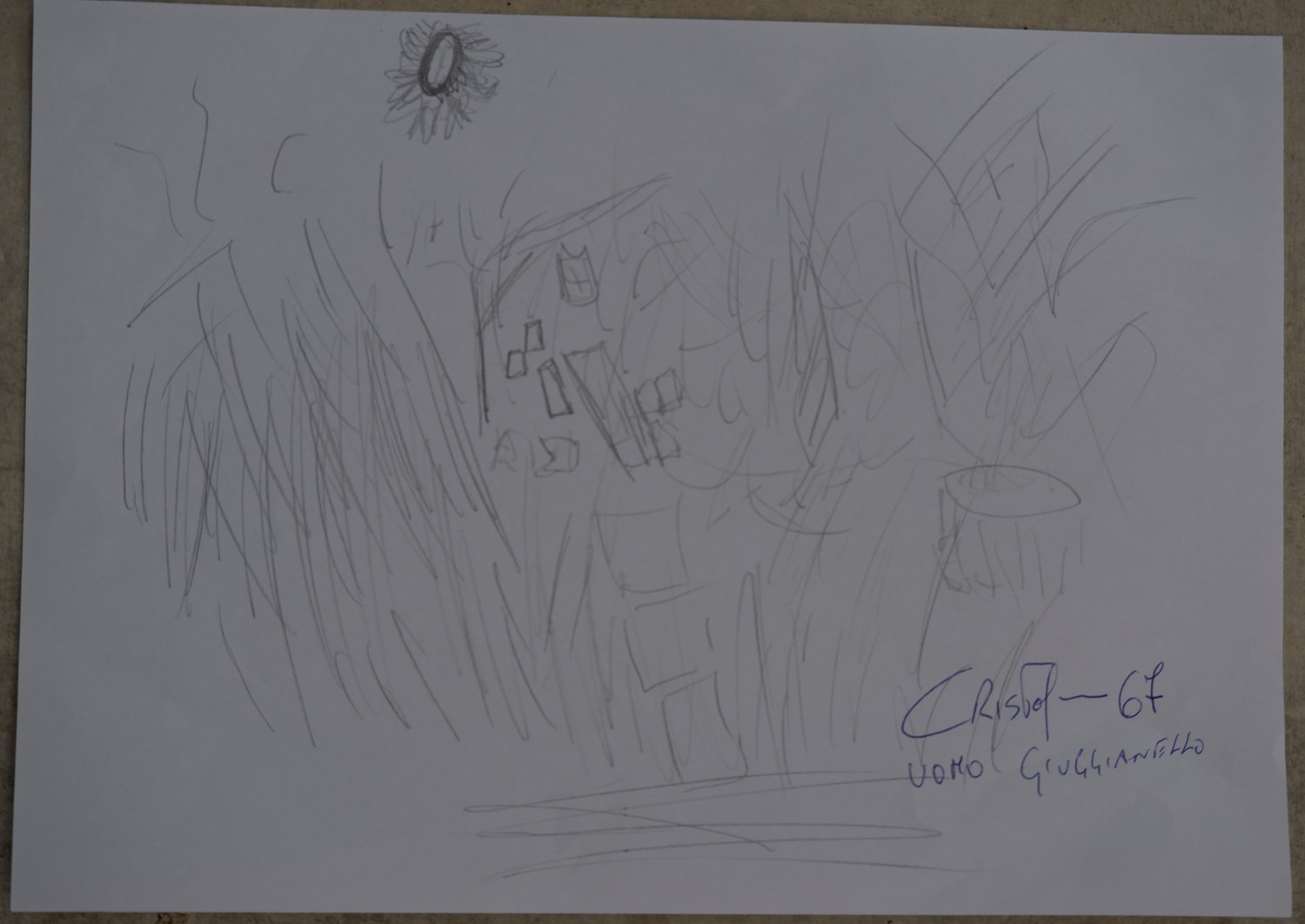
as remembered · around age 10
“Ricordo d’infanzia: avevo circa 10 anni, in campagna con i miei genitori e i miei fratelli, a giocare immersi nella natura.”
“A childhood memory — I was about 10 years old, in the countryside with my parents and siblings, playing, immersed in nature.”
Drawn by Leonardo — 20, man, from Giuggianello
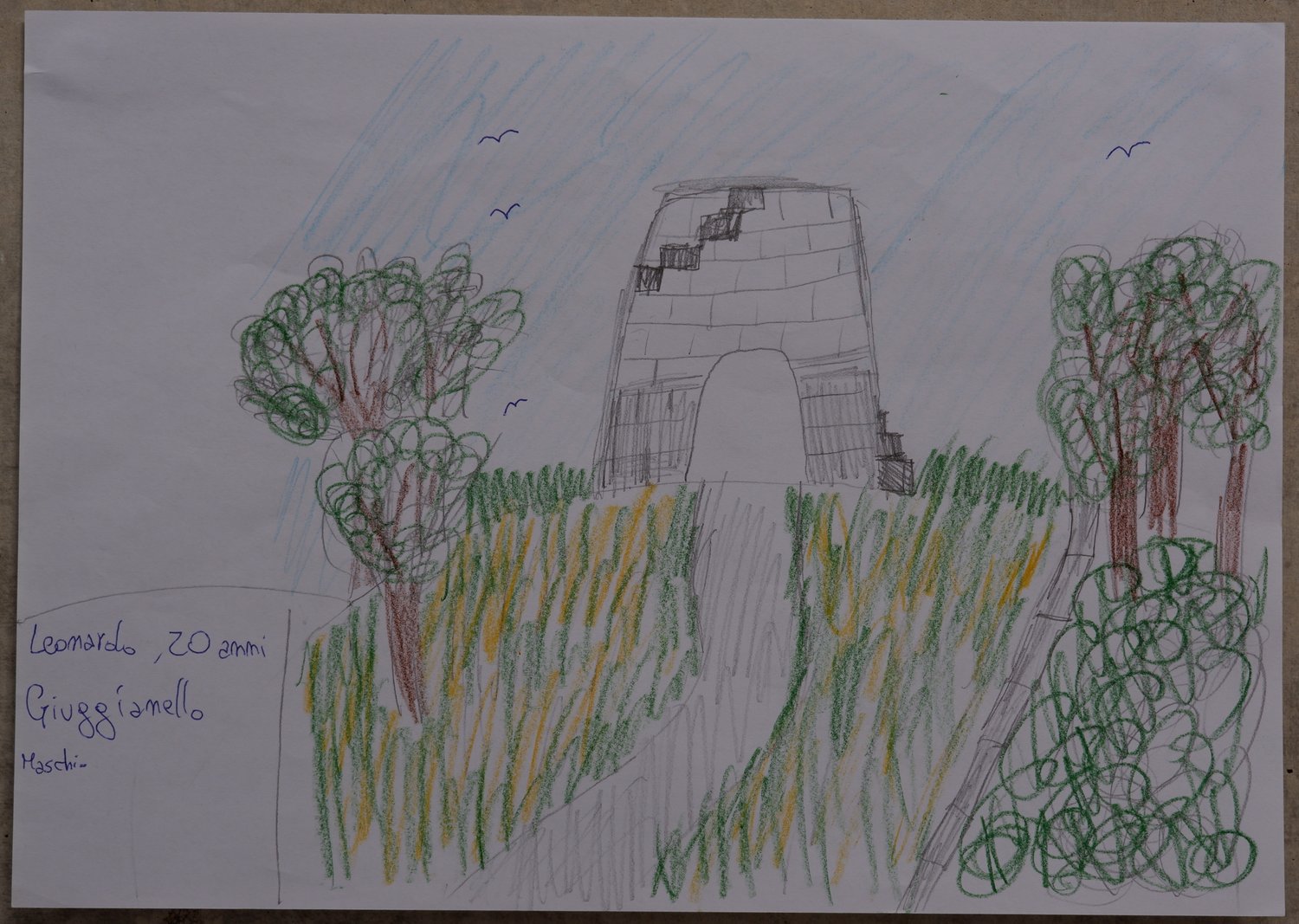

as remembered · 2016–2017
“Ho disegnato un pagliaro, una costruzione tipica del Salento; questo in particolare si trova su una piccola collina. La particolarità di questo luogo è che, dalla cima, si vede tutta Giuggianello. Quand’ero piccolo salivo là sopra con i miei amici: era per noi un luogo dove salire per rilassarci e divertirci.”
“I drew a pagliaro, a structure typical of Salento; this one stands on a small hill. What makes this place special is that from the top you can see all of Giuggianello. When I was younger I used to climb up there with my friends — a place for us to relax and have fun.”
Drawn by Alessia — 24, woman, from Maglie
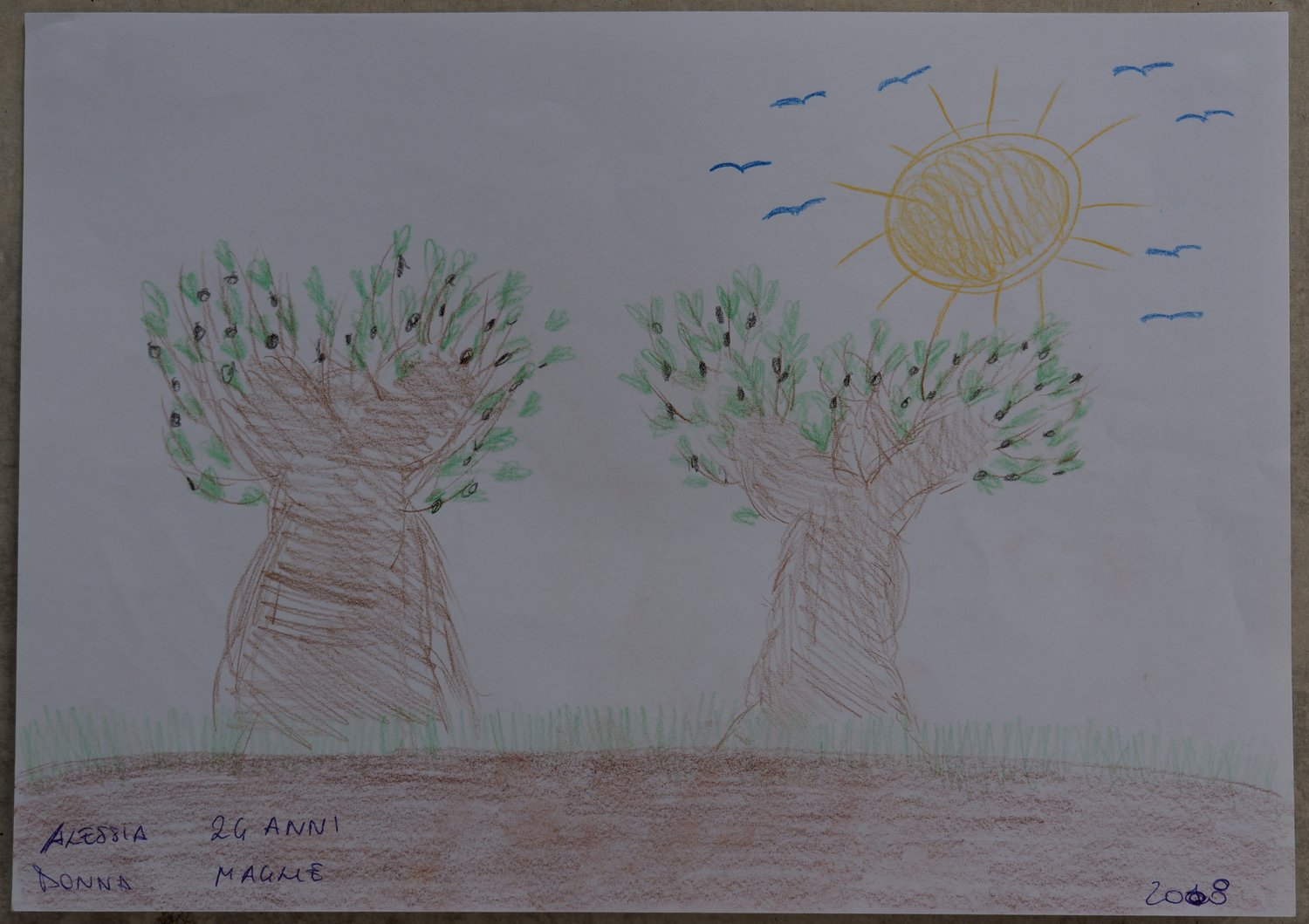

as remembered · 2008
“Ho rappresentato l’uliveto di famiglia, a Maglie, nel periodo di novembre, in piena fioritura. Ci recavamo lì per la raccolta delle olive, poiché abbiamo un’azienda agricola e produciamo olio.”
“I drew my family’s olive grove in Maglie, in November, in full bloom. We would go there for the olive harvest, since we have a farm and produce oil.”
Drawn by Gloria — 34, woman, from Uggiano La Chiesa
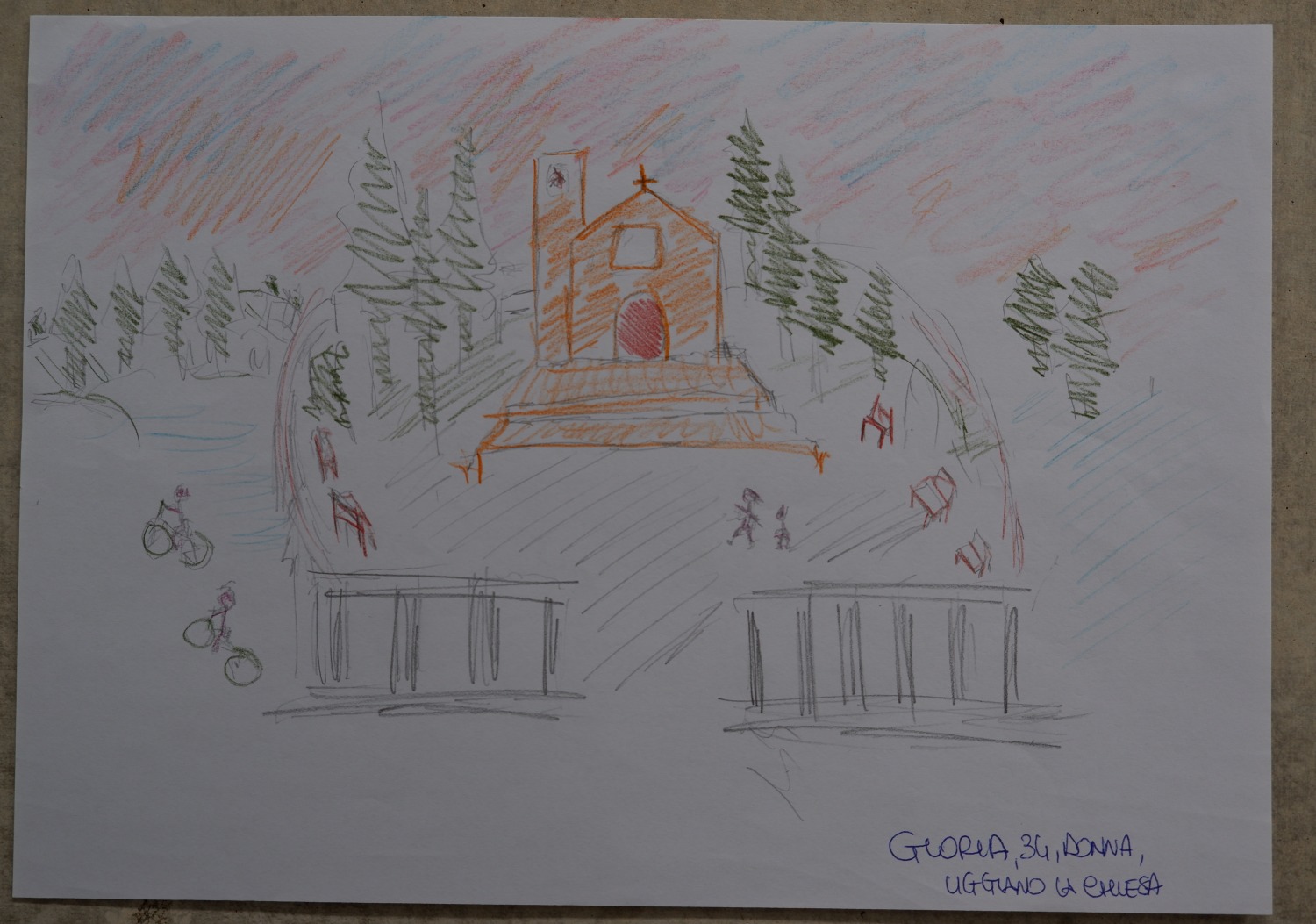
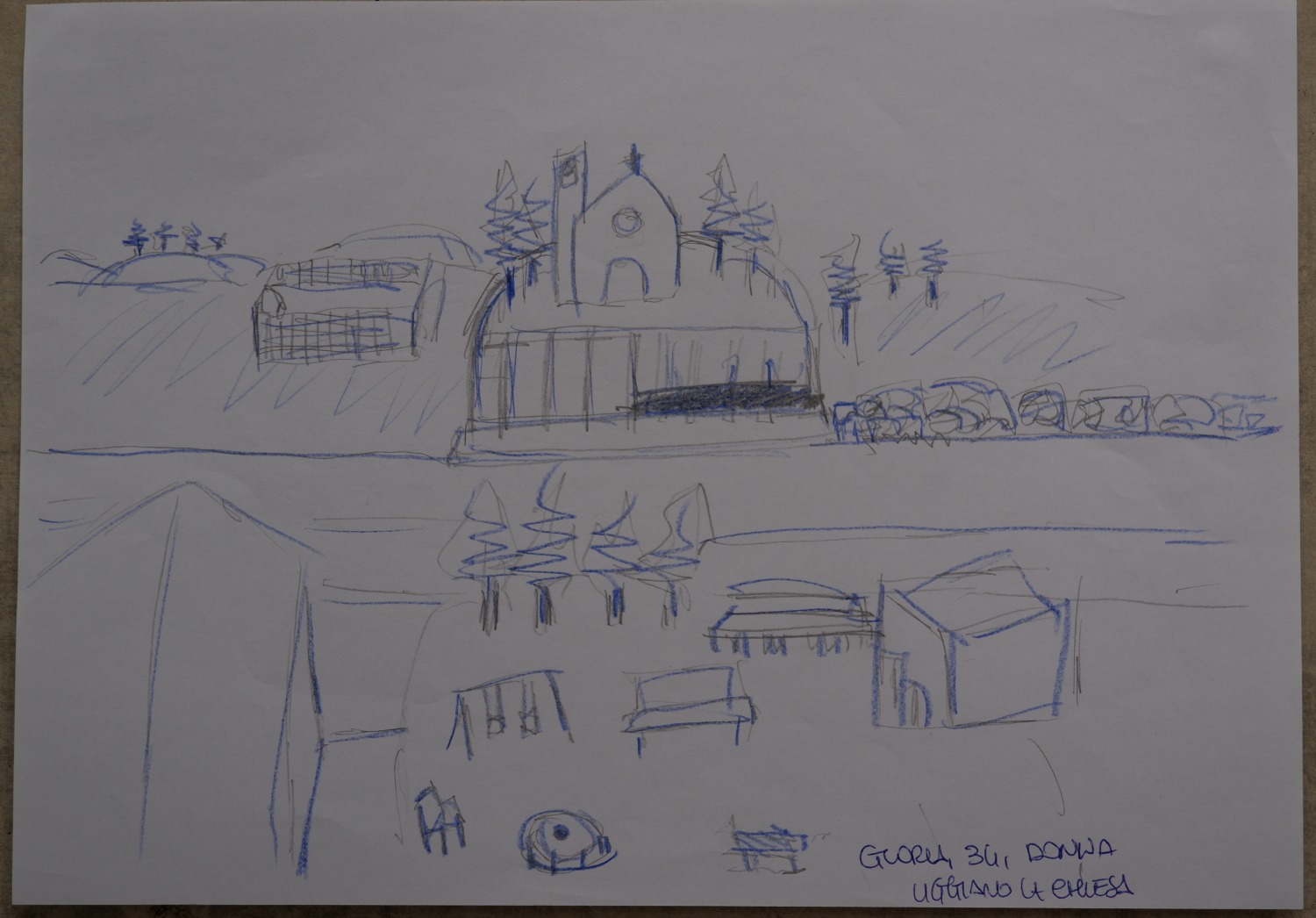
as remembered · 2003
“Ho scelto di rappresentare un santuario in campagna, luogo di molti momenti spensierati della mia adolescenza, posto di pace e rifugio nei momenti di bisogno. Da ragazzina ci andavo spesso in bicicletta.”
“I chose to draw a sanctuary in the countryside, the setting for many carefree moments of my adolescence, a place of peace and refuge whenever I needed it. As a girl I used to ride my bike there often.”
Drawn by Albina — 40, woman, from Giuggianello
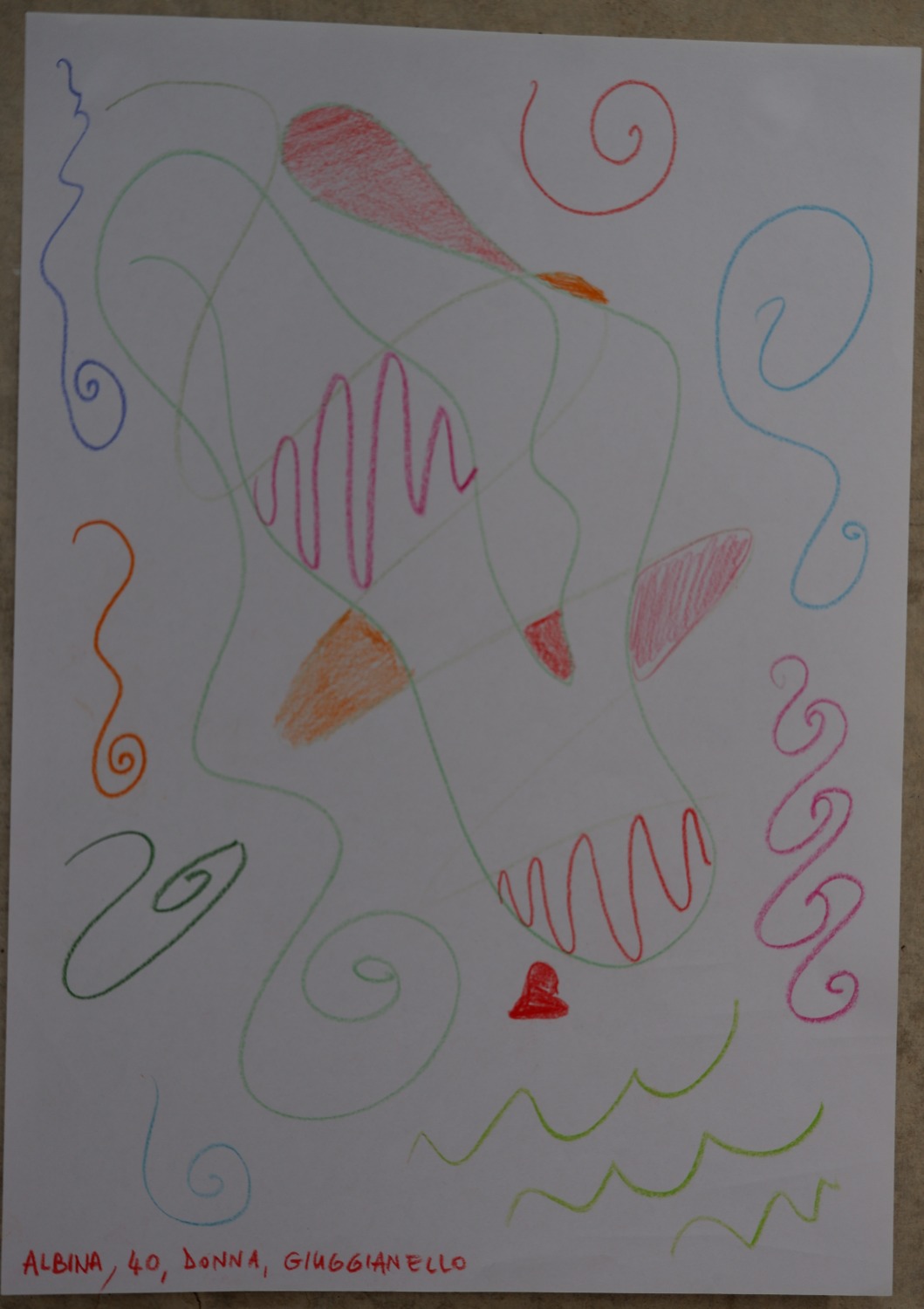
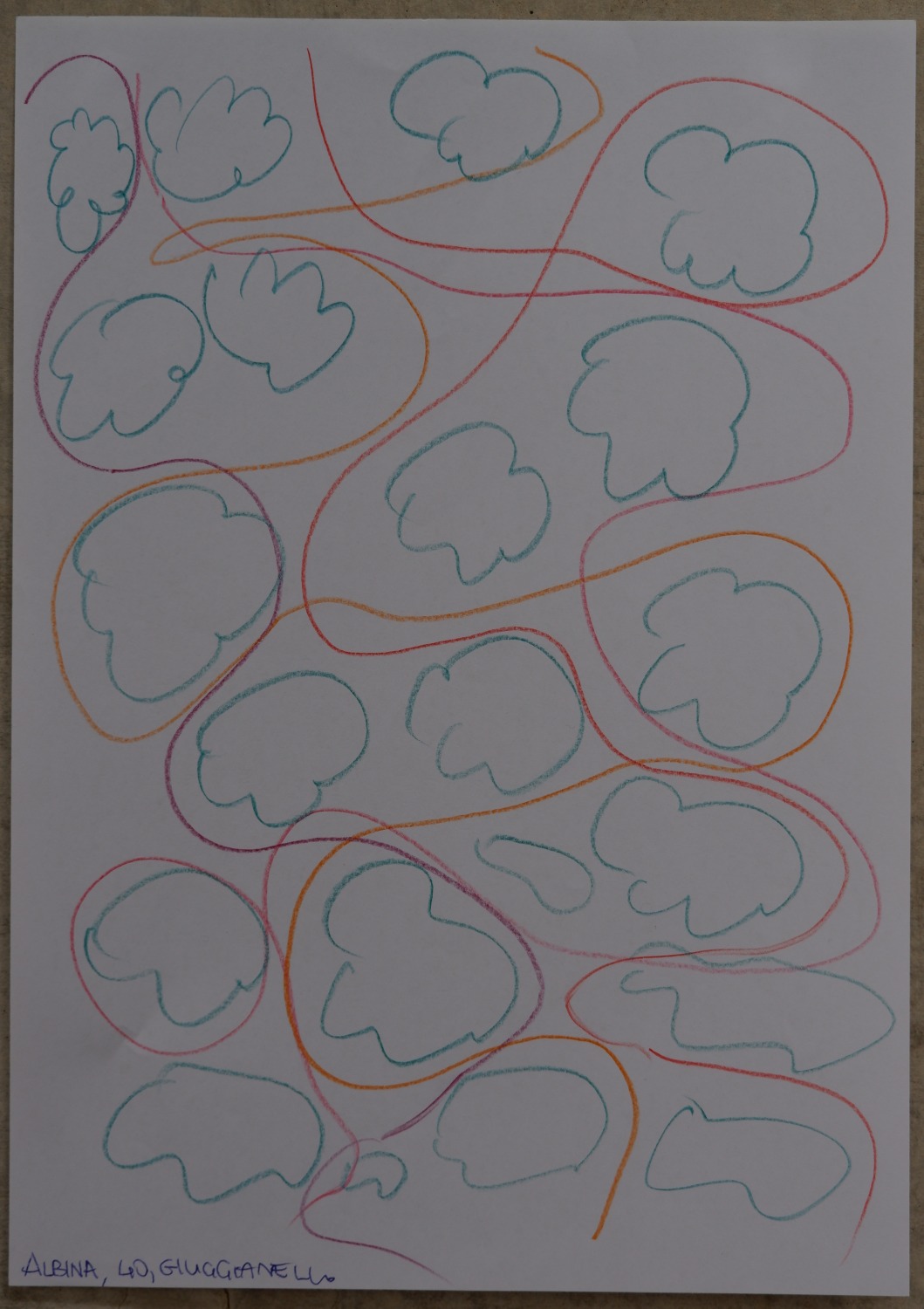
as remembered · childhood summers
“Ho rappresentato le tante emozioni che mi attraversavano quando con la mia famiglia venivamo dal Friuli al Salento per l’estate. Nei giochi coi miei cugini, che ritrovavo solo nel periodo delle vacanze estive, c’erano tante emozioni, ma soprattutto ricordo la gioia di sentire intorno la famiglia allargata che nella vita ordinaria al nord non potevo vedere. Ho rievocato queste emozioni pensando alla campagna di mio zio Mimmo a Morigino: intorno a me tanto verde di alberi, la terra rossa, i muretti a secco. Le voci di noi bambini durante i giochi... e una sensazione di appartenenza e radicamento.”
“I drew the many emotions running through me when my family would come down from Friuli to Salento for the summer. In the games with my cousins, whom I only saw during the summer holidays, there was so much feeling — but most of all I remember the joy of having the extended family around me, which ordinary life up north never let me see. I called up these emotions thinking of my uncle Mimmo’s countryside in Morigino: all around me the green of the trees, the red earth, the dry-stone walls. The voices of us children at play... and a feeling of belonging and being rooted.”
Drawn by Sara — 45, woman, from Giuggianello
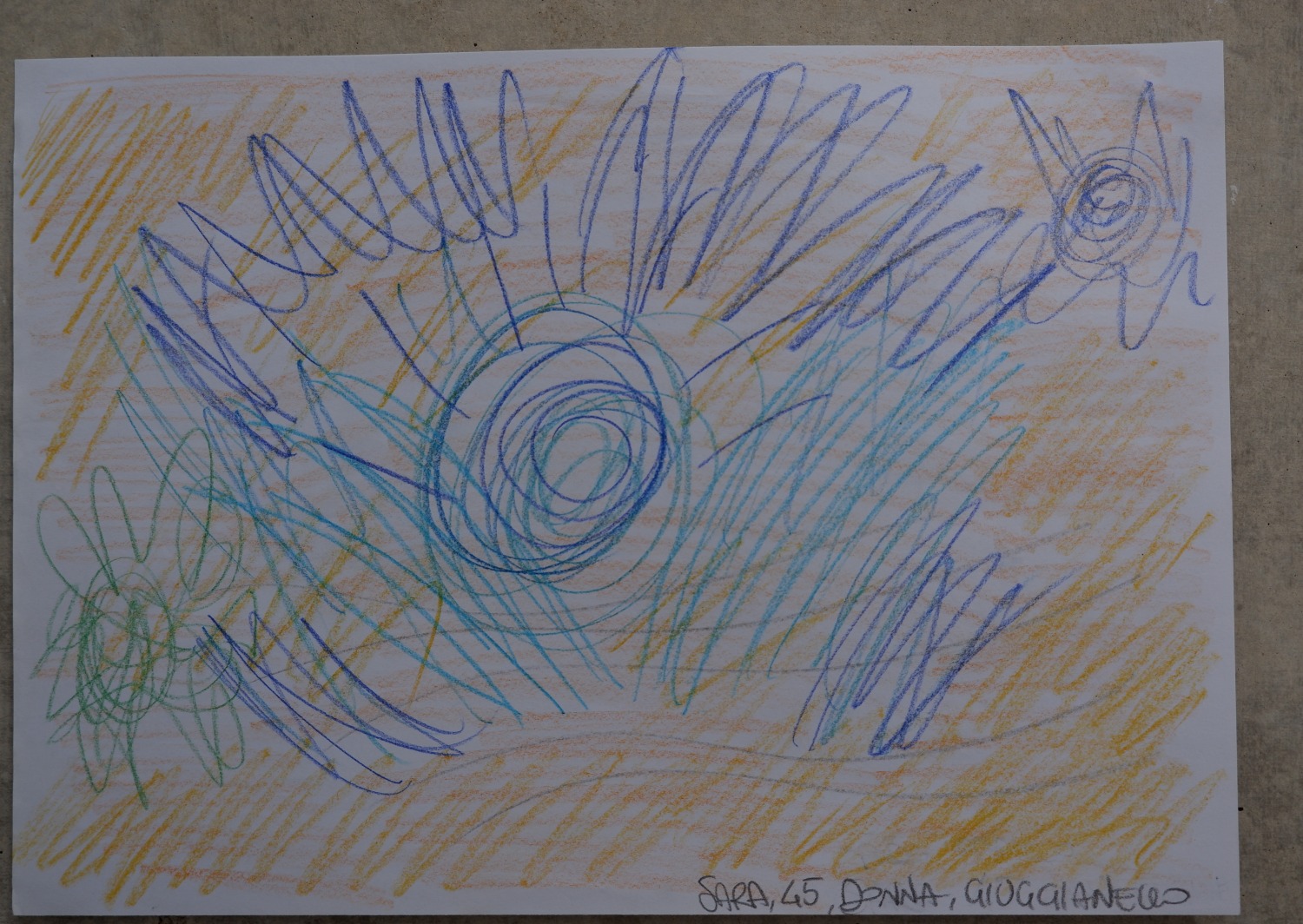

as remembered · summer 1992
“Porto Badisco, Otranto (Lecce), località ‘Fortino’... tuffi in mare di tutti i tipi con due cugine. Estate 1992, avevo 12 anni: spensieratezza, divertimento, sole, caldo, libertà, prima autonomia. Ogni giorno andavamo al mare sugli scogli, e ci divertivamo a tuffarci da un trampolino naturale di roccia nel mare azzurro; intorno c’era gente, non troppa, scogli, mare, uccelli e pesci. Mi sentivo libera perché adoro nuotare nel mare pulito. L’ambiente intorno era incontaminato. Potevamo fare tante prove di tuffi, anche buffi, senza paura di sbagliare.”
“Porto Badisco, Otranto, the ‘Fortino’ spot... all kinds of dives into the sea with two cousins. Summer 1992, I was 12: lightheartedness, fun, sun, warmth, freedom, my first taste of independence. Every day we went to the sea on the rocks, and loved diving off a natural stone diving board into the blue water; around us were a few people, rocks, sea, birds and fish. I felt free because I love swimming in clean water. The surroundings were unspoiled. We could try dive after dive, even silly ones, without any fear of getting it wrong.”
Drawn by Martina — 36, woman, from Giuggianello

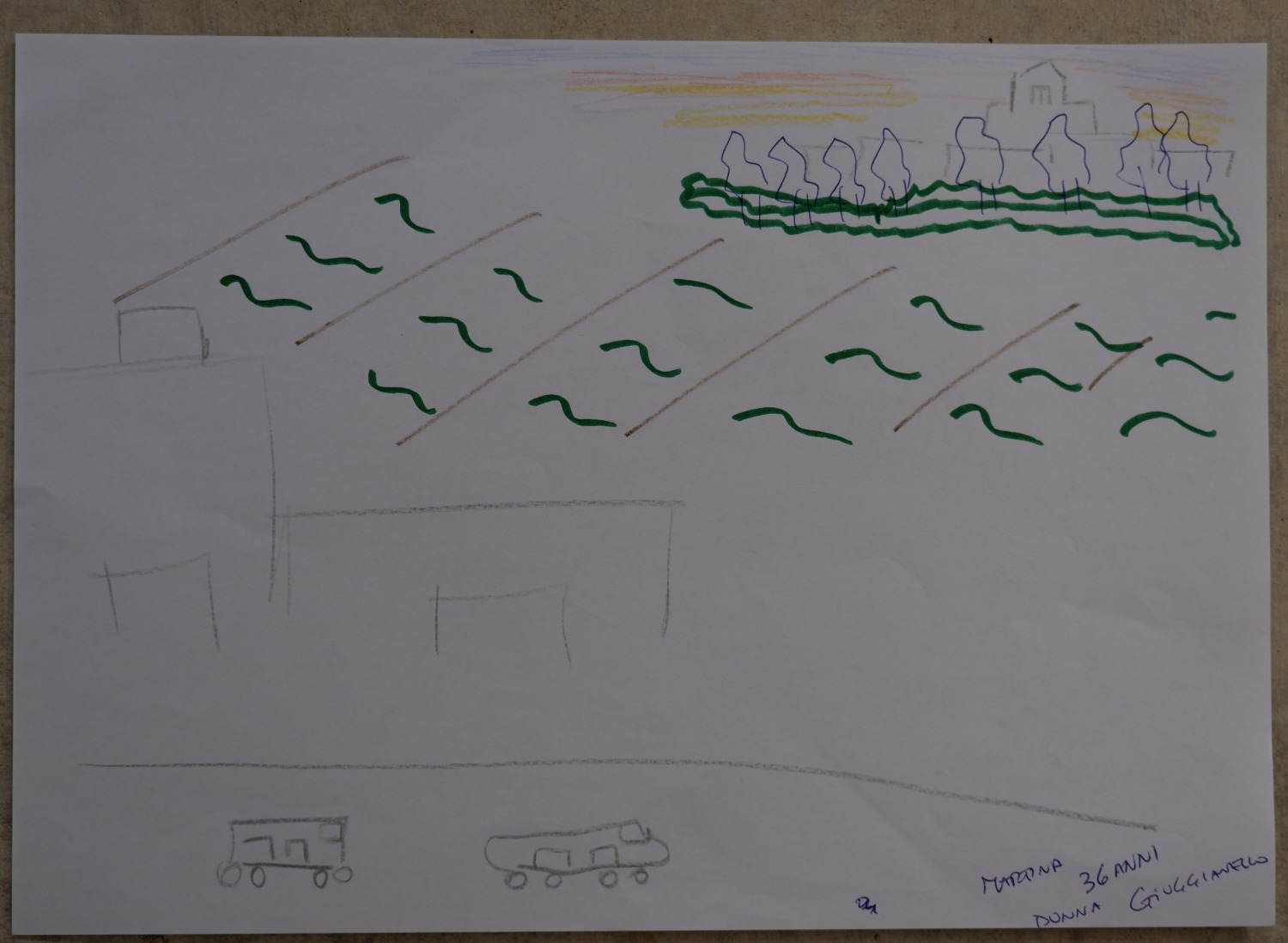
as remembered · age 5–6
“Ho disegnato la campagna del nonno a Giuggianello. Rappresenta libertà collegata alla natura, gioco, divertimento, affetto, spensieratezza, gioia, sorrisi.”
“I drew my grandfather’s countryside plot in Giuggianello. It represents freedom bound up with nature, play, fun, affection, lightheartedness, joy, smiles.”
Drawn by Michele — from Giuggianello
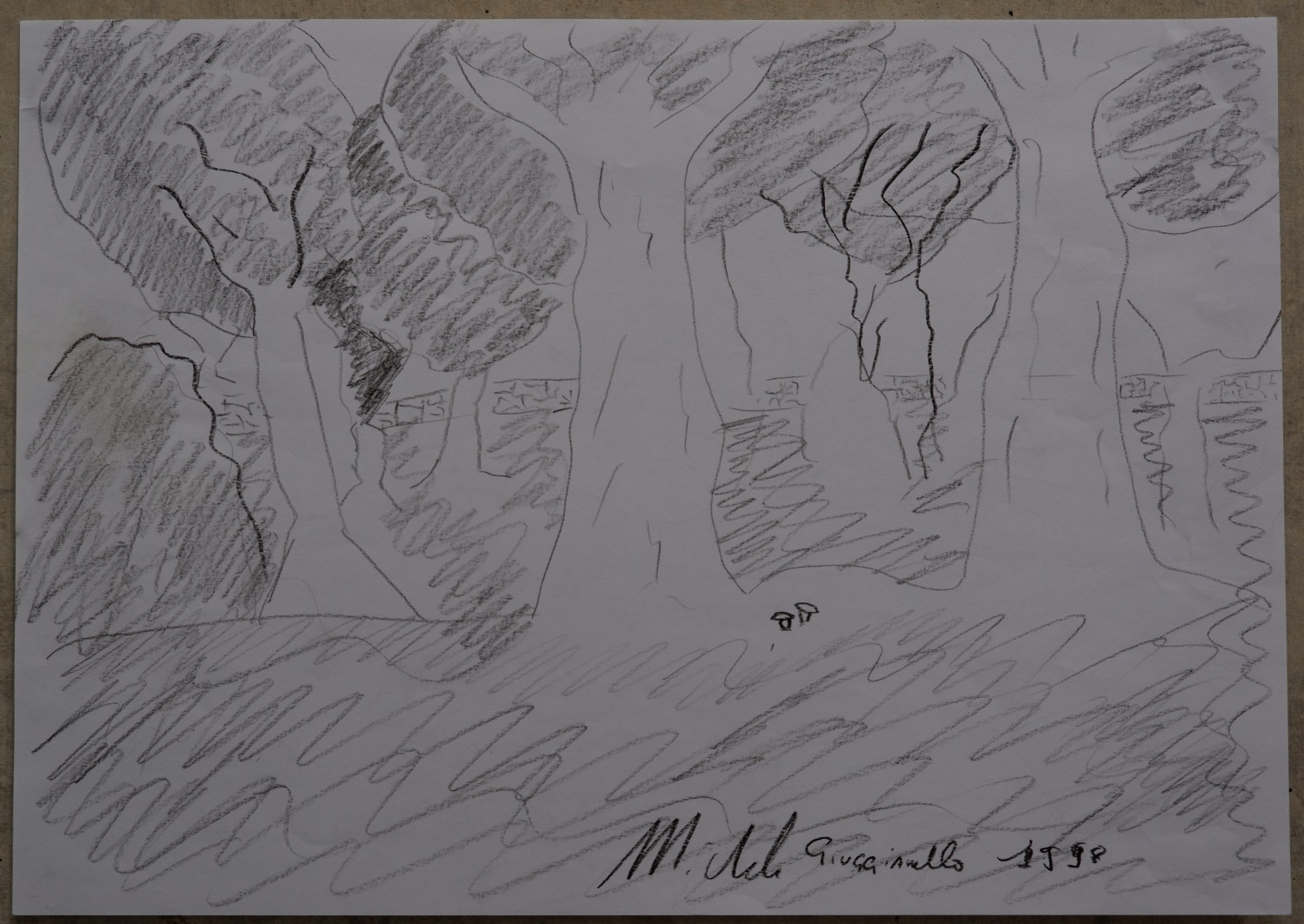
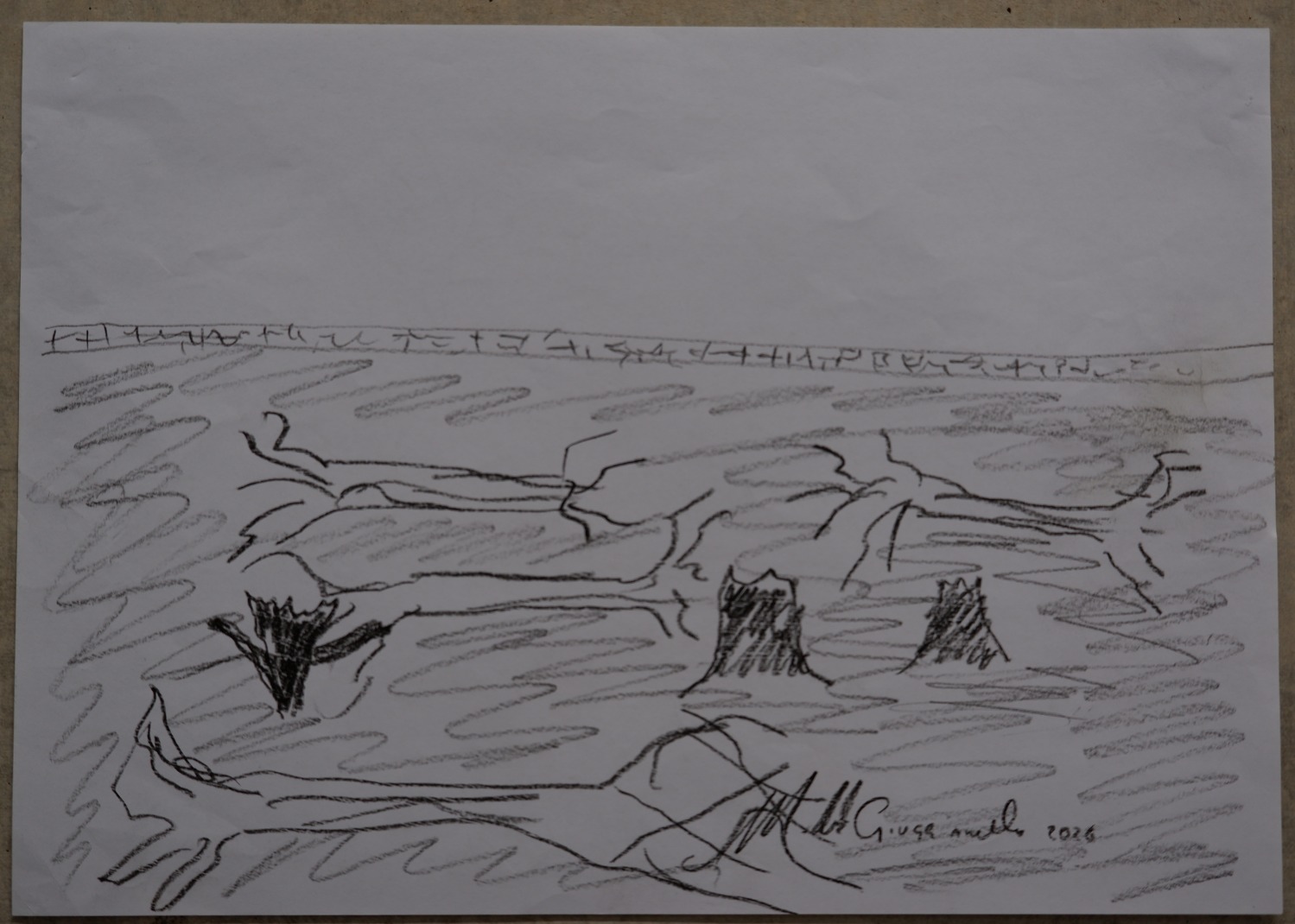
as remembered · 1998
“Il disegno rappresenta per me il giorno che decisi di trasferirmi definitivamente in Salento.”
“For me, this drawing represents the day I decided to move to Salento for good.”
Drawn by Julia — 44, woman, from Giuggianello
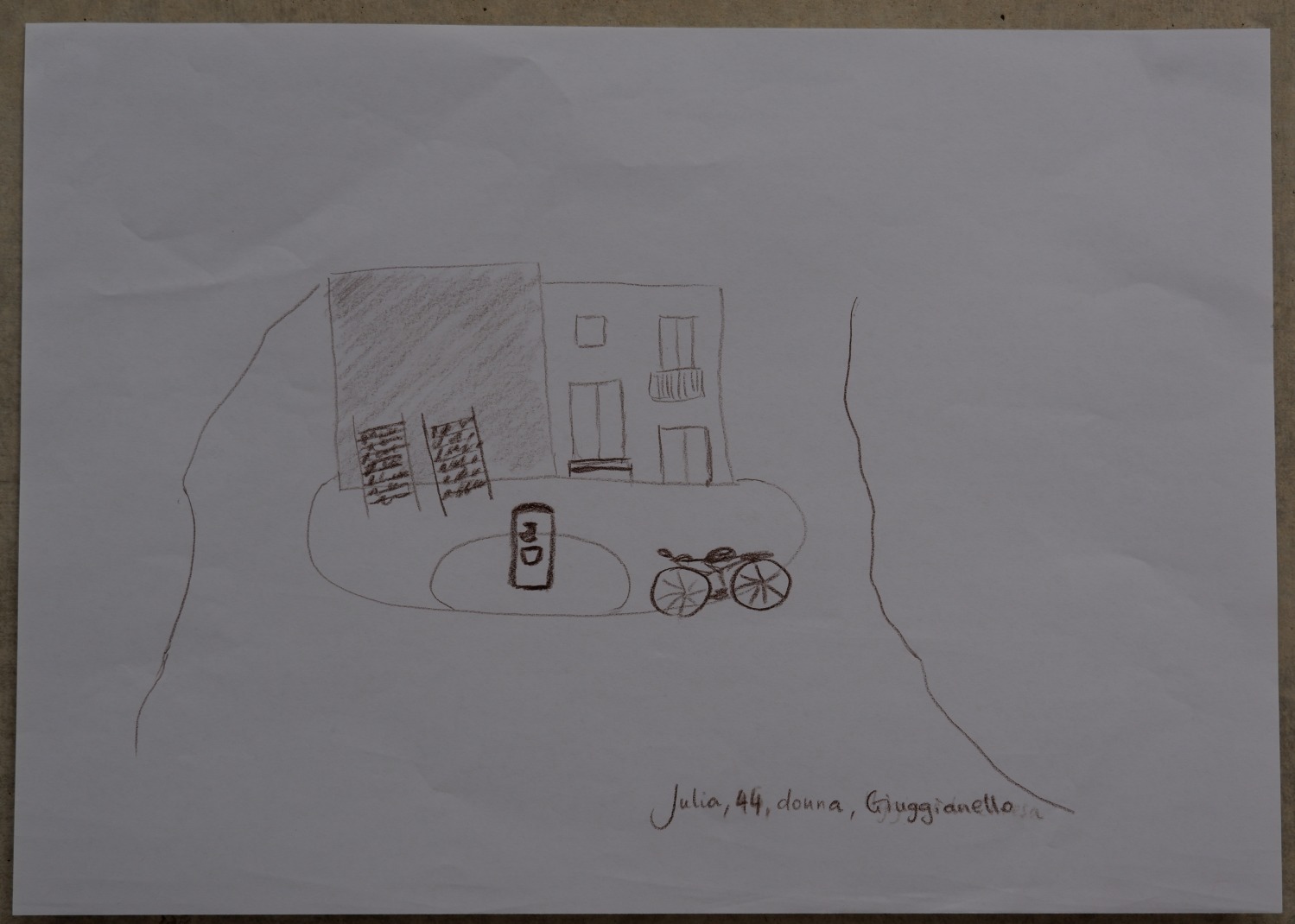
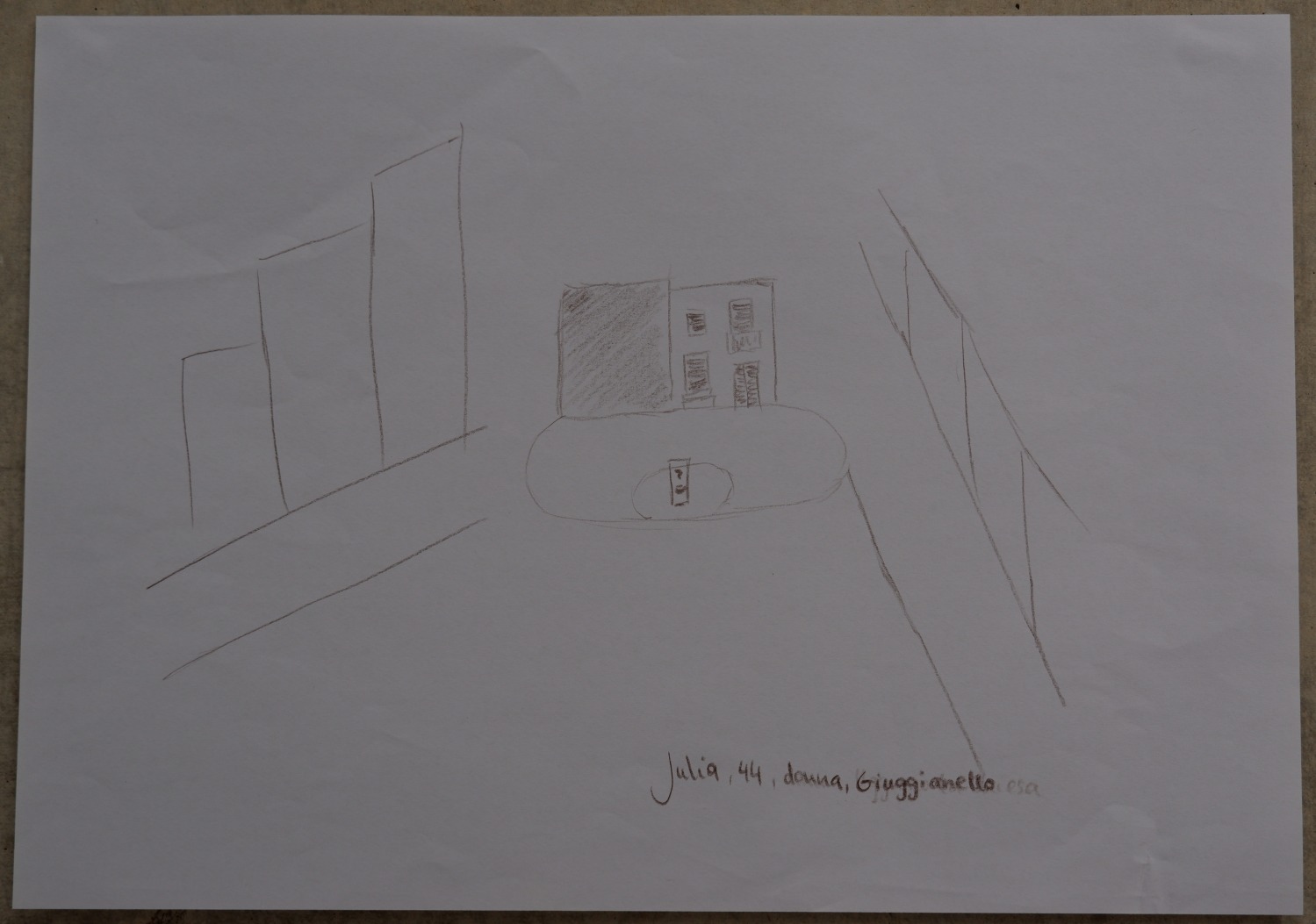
as remembered · 1987
“Ho disegnato la piazzetta di Santa Lucia (Uggiano La Chiesa, 1987) dove c’è la casa dei nonni. È un luogo di giochi all’aperto, profumi di tabacco messo ad essiccare, acqua della fontana per rinfrescarsi, caldo estivo, profumo di peperoni fritti.”
“I drew the little square of Santa Lucia (Uggiano La Chiesa, 1987), where my grandparents’ house is. It’s a place of playing outdoors, the smell of tobacco leaves set out to dry, fountain water to cool off with, summer heat, the smell of fried peppers.”
Drawn by Ambrogio — approx. 54, man, from Neviano
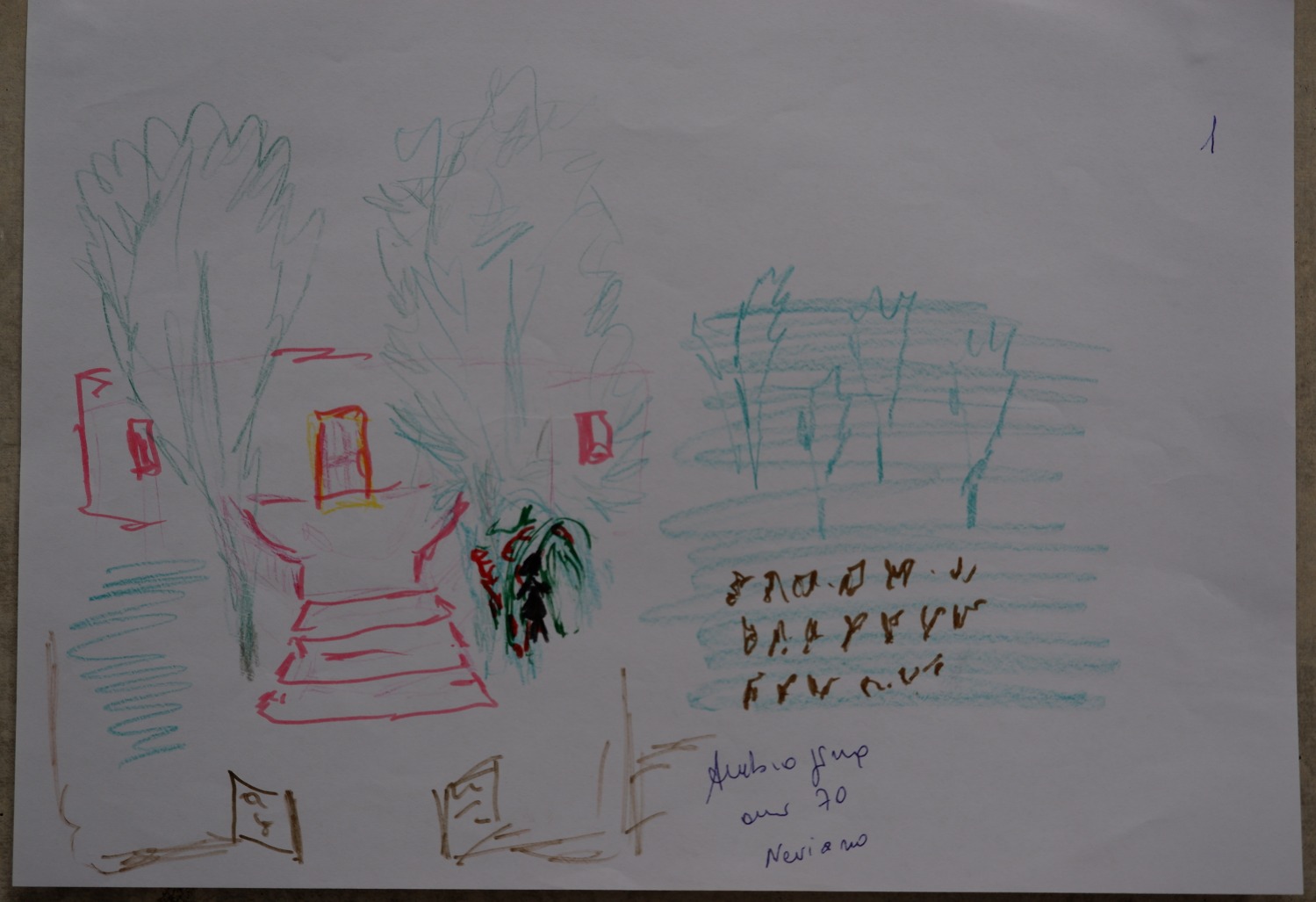
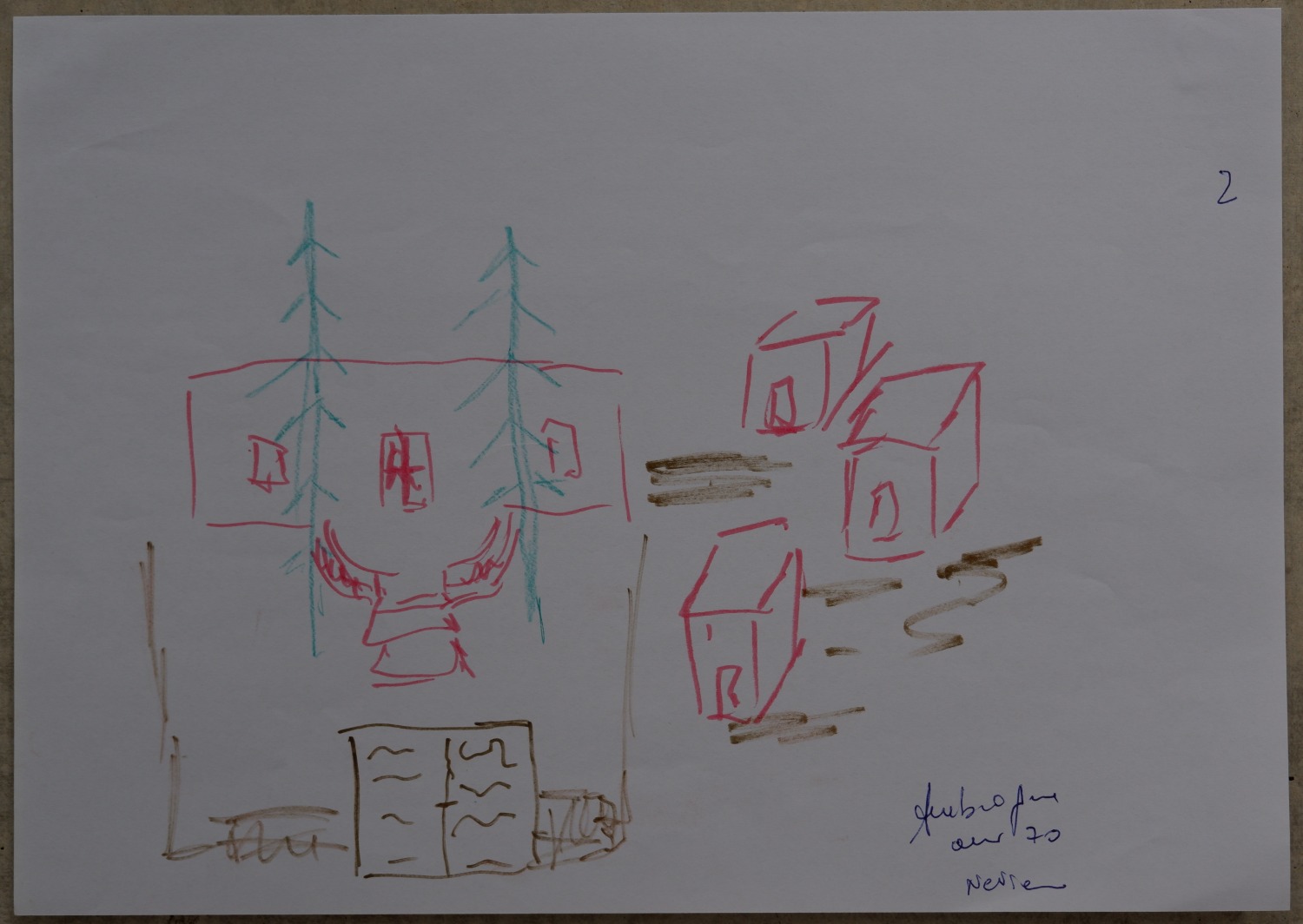
as remembered · late 1970s, age 6
“Ero in una casa di campagna delle mie zie. Sono in una specie di capanna fatta di fronde dove andavo spesso. Avevo 6 anni ed era estate. Rappresenta protezione e serenità.”
“I was at my aunts’ country house. I’m in a kind of hut made of branches that I used to visit often. I was 6 years old and it was summer. It represents protection and serenity.”
Drawn by Rachele Resta — 66, woman, from Giuggianello
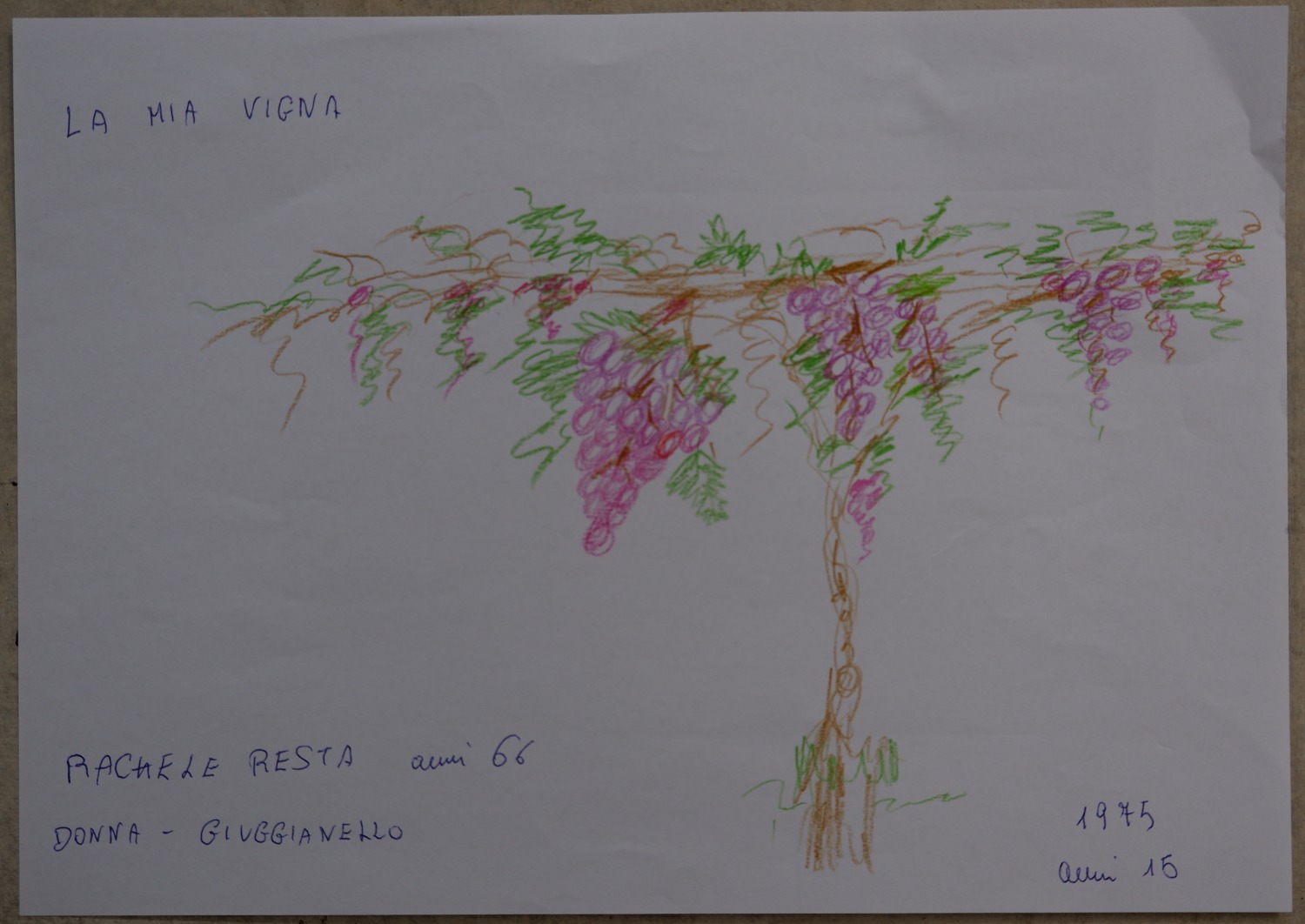
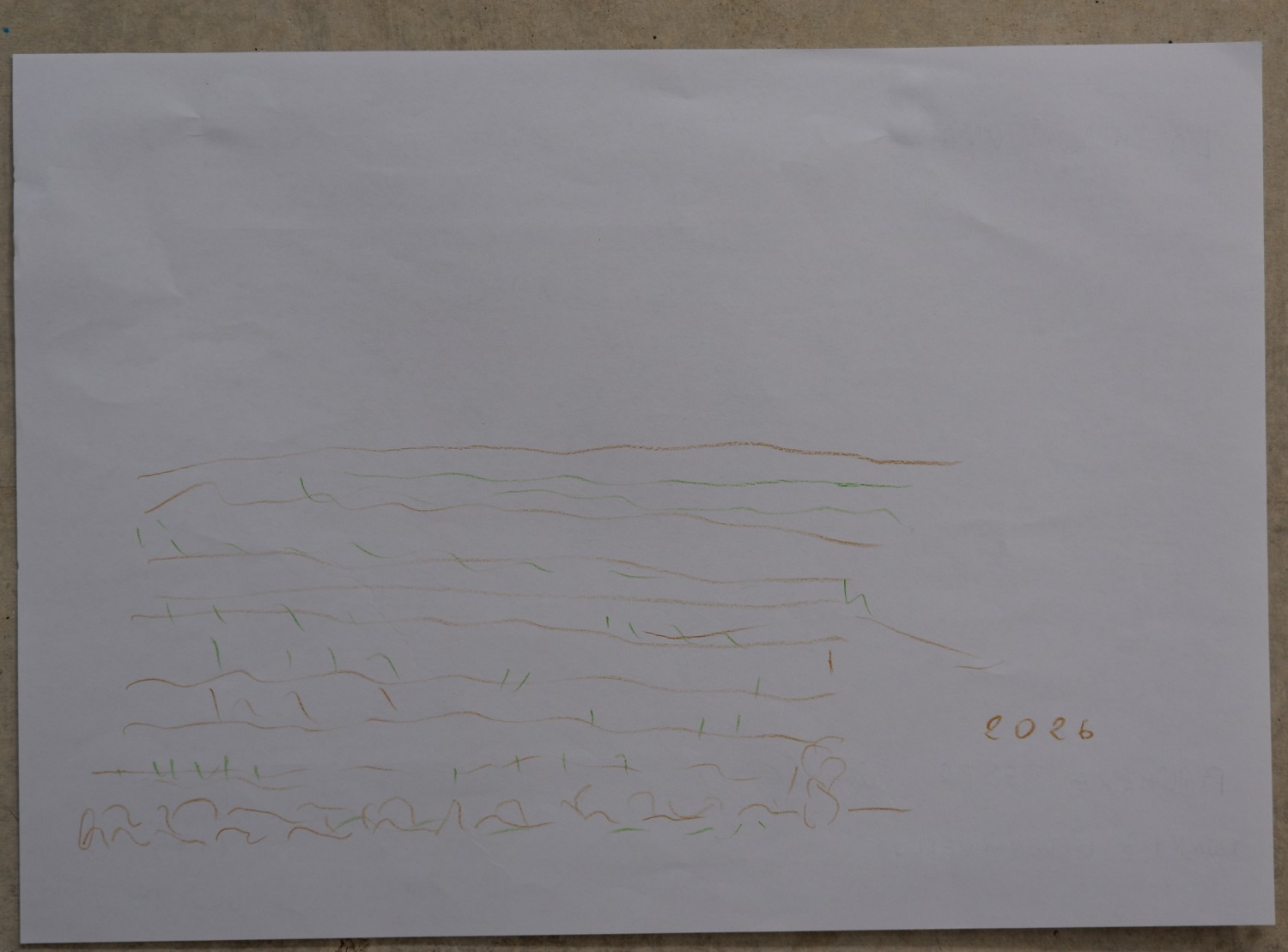
as remembered · 1975, age 15
“1975, avevo 15 anni. La mia vendemmia. Questo grappolo d’uva rappresenta un ricordo bellissimo che riaffiora spesso in me e che riguarda la mia adolescenza. Il ricordo va alla mia vigna, una bella vigna a spalliera che mio padre piantò con amore alla nascita mia e delle mie sorelle gemelle. Ogni anno, quando arrivava la vendemmia, era una festa: ci partecipava tanta gente del paese, ed erano giorni di lavoro ma anche di canti.”
“1975, I was 15. My grape harvest. This bunch of grapes holds a beautiful memory that often comes back to me, from my adolescence. It takes me back to my vineyard, a lovely trellised vineyard my father planted with love when I and my twin sisters were born. Every year, when harvest time came, it was a celebration: so many people from the village took part, and the days were full of work but also of singing.”
Drawn by Vincenzo Ruggeri — 82, man, from Giuggianello
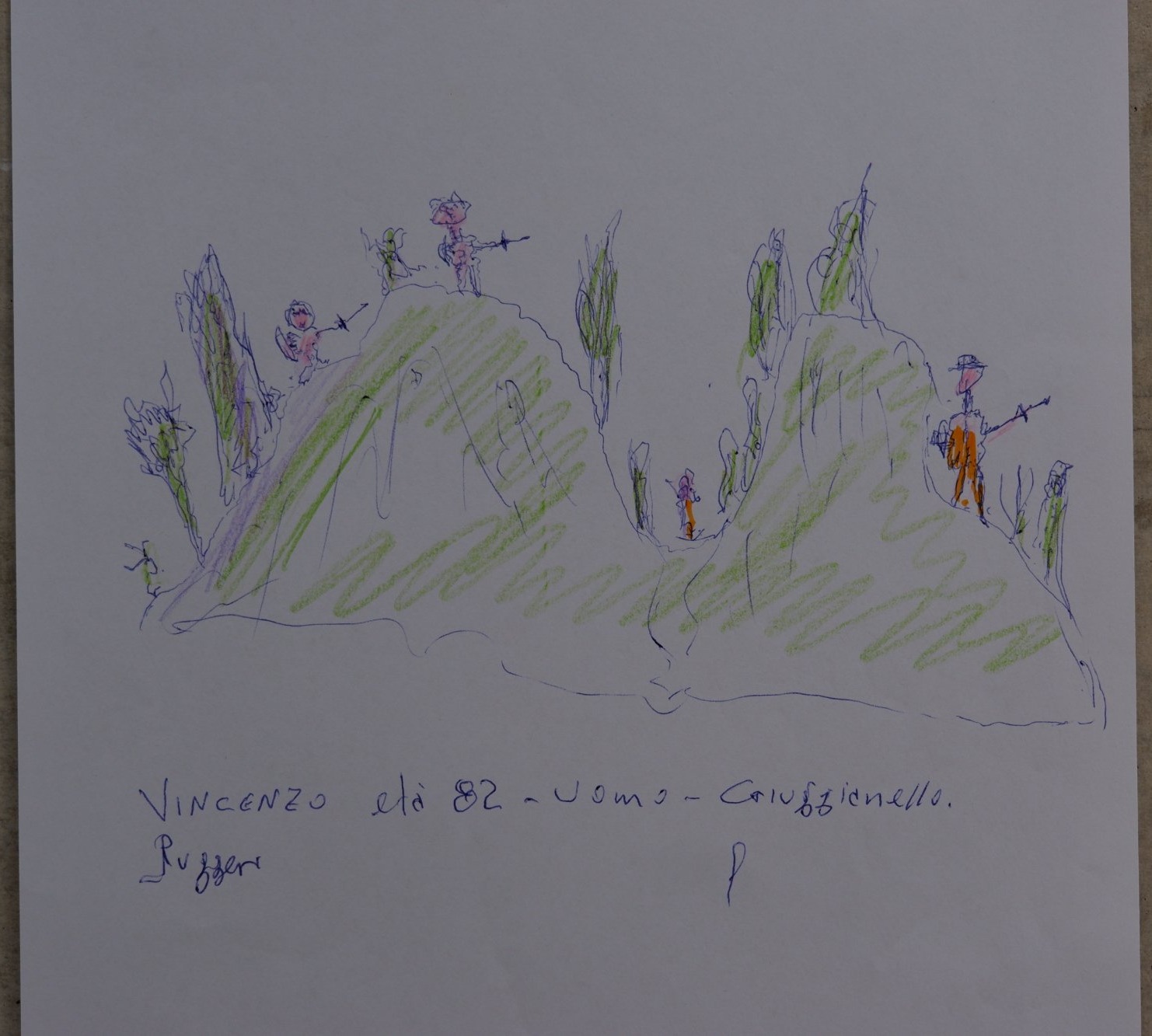
as remembered · age 8–10
“Ho disegnato la ‘Macchia de lu Cutrino’, un posto sulla Serra di Giuggianello, a un livello di 120 m sul livello del mare; in valle si trova la cappella della Madonna della Serra. Noi bambini avevamo 8, 9, 10 anni. Ogni domenica si andava a giocare agli indiani, oppure a combattere tra cavalieri medievali. Era il periodo in cui nei cinema si proiettava il film ‘La Gerusalemme Liberata’. Io ero impegnato a portare spade, lance e scudi per il gruppo dei ‘crociati’ e per quello musulmano.”
“I drew the ‘Macchia de lu Cutrino’, a spot on the Serra di Giuggianello, about 120 m above sea level; down in the valley is the ‘cappella della Madonna della Serra’ (the chapel of the Madonna della Serra). We children were 8, 9, 10 years old. Every Sunday we’d go play at being Indians, or fight as medieval knights. It was the time when cinemas were showing the film ‘Jerusalem Delivered’. I was in charge of carrying swords, lances and shields for the ‘crusaders’ group and for the Muslim one.”
Drawn by Solveiga — 34, woman, from Malupe, Latvia
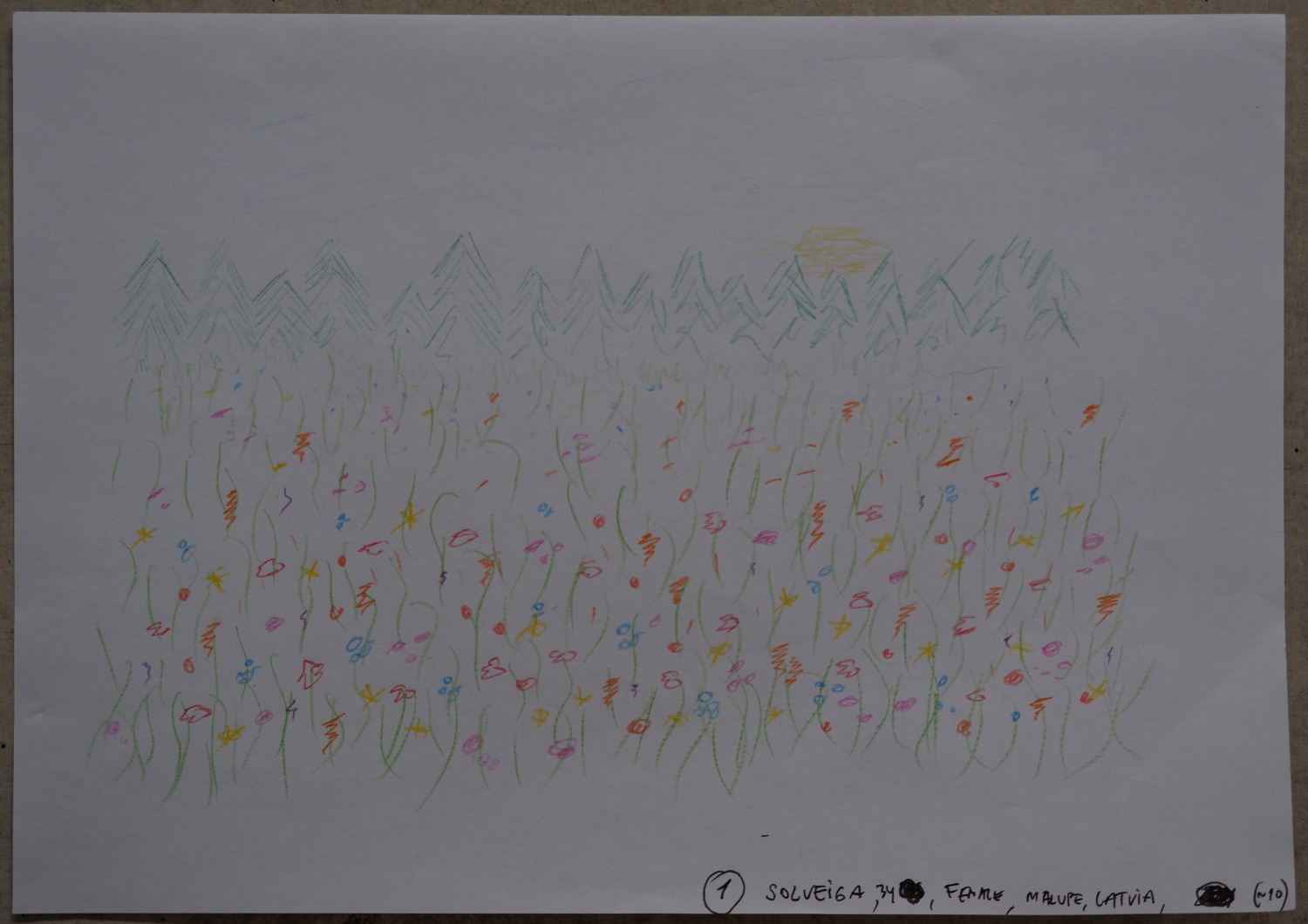
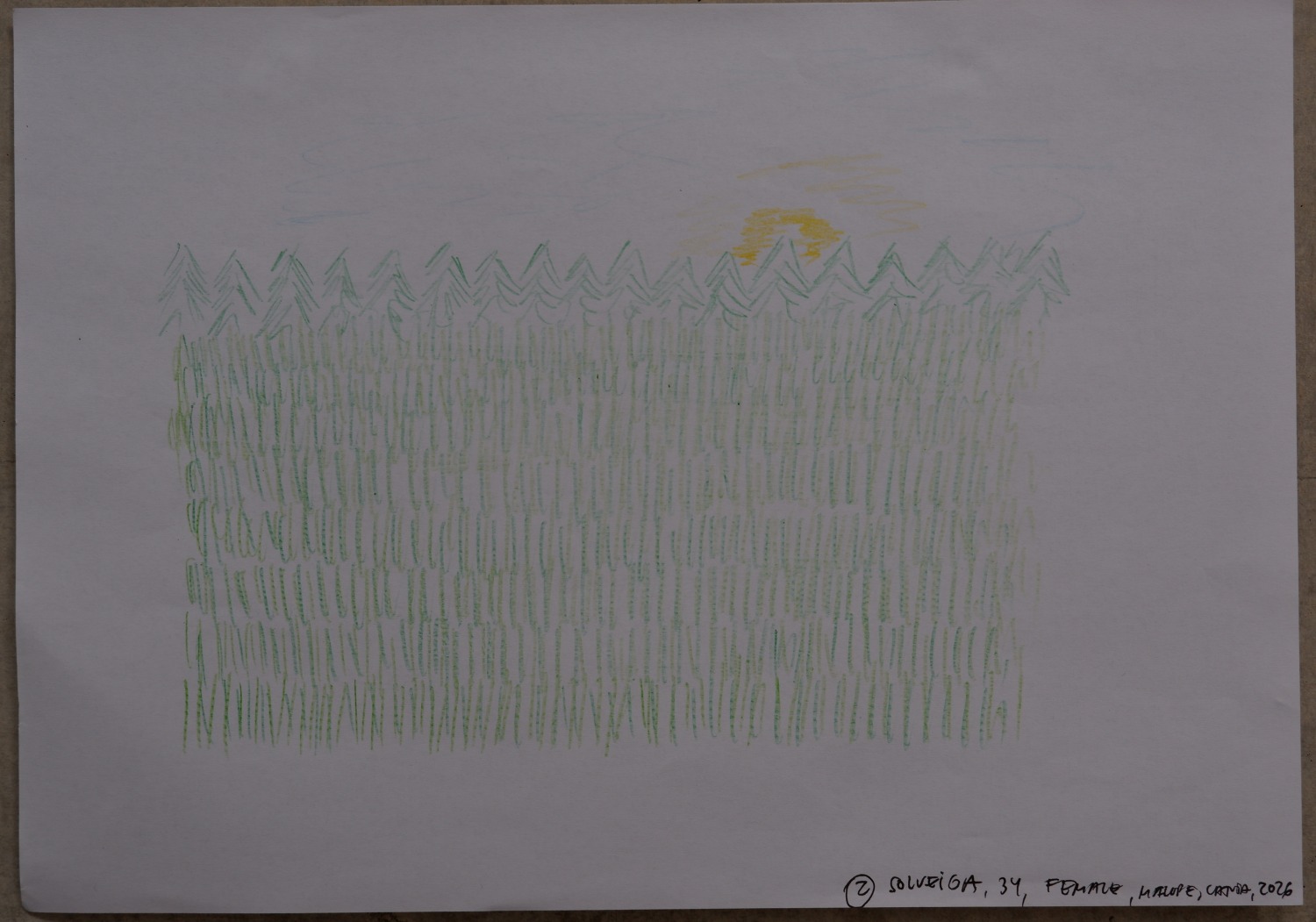
as remembered · 2001
“This is my countryside meadow at ‘Lejaskromani’, in Malupe, Latvia, 2001. I remember it full of flowers of every colour, with such a scent — a rich, diverse meadow, perfect for making a midsummer flower crown, or simply walking around and enjoying the flowers, the smells, the birdsong, the sun. It’s a place of happiness and peace.”
First entry from elsewhere in the world — drawing photographed for the archiveDrawn by Martin — 25, man, from Ida-Virumaa, Estonia
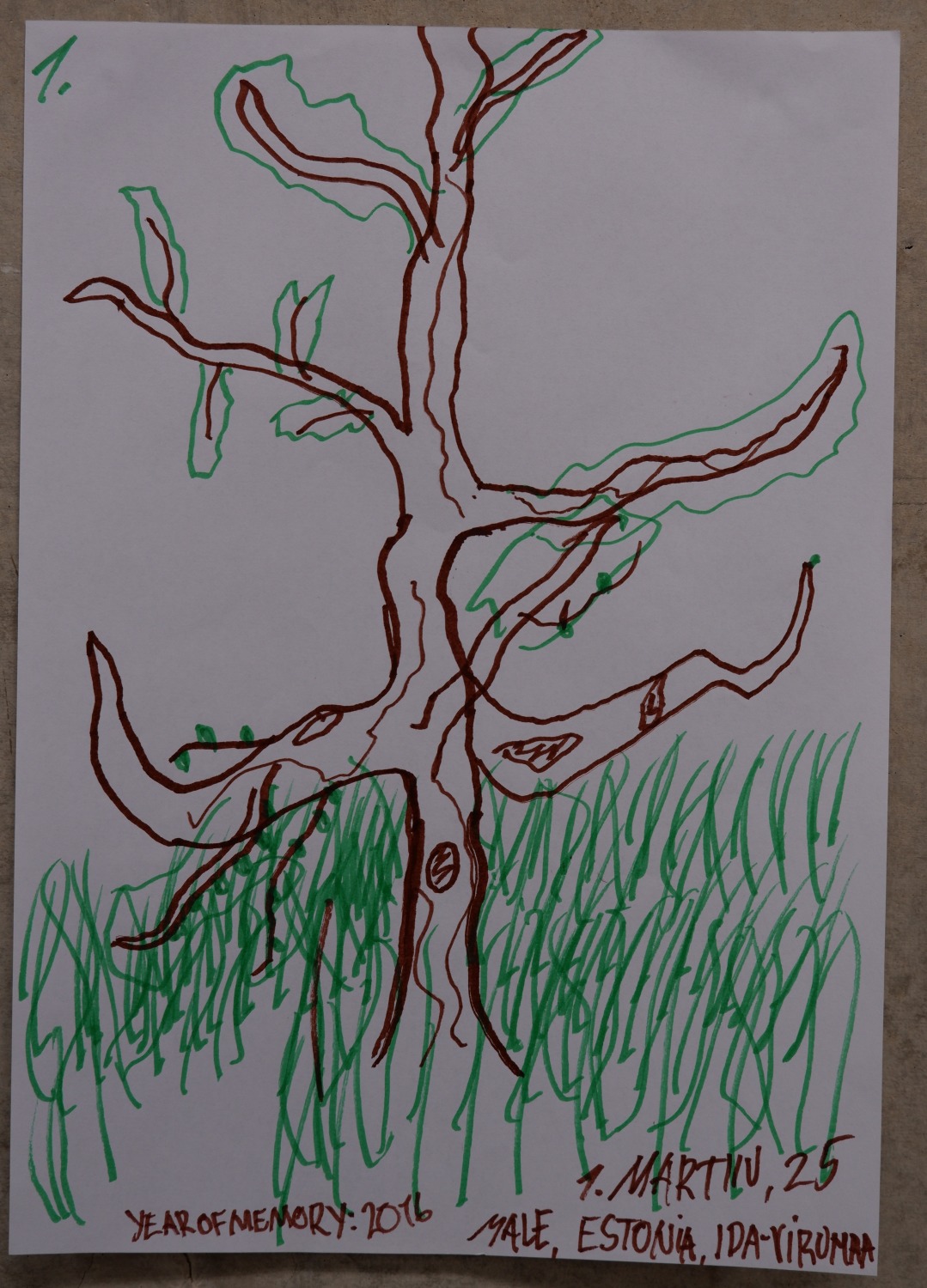
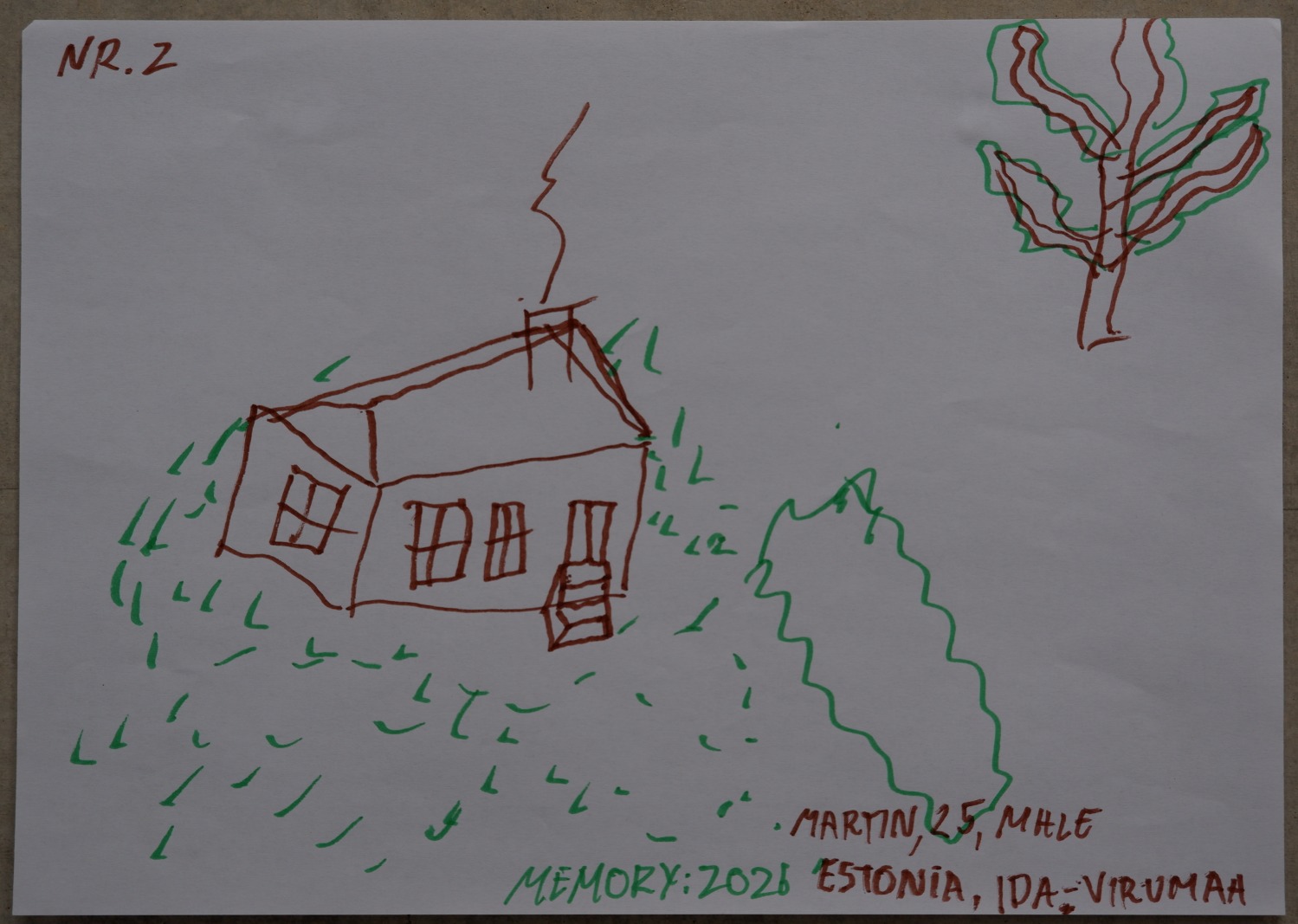
as remembered · 2016
“A great, tall oak that seemed endless to me, because I could never climb to the top. I used to read there during my summers, in the company of bugs, passing deer, bear droppings, and the smell of cut grass.”
Drawing photographed for the archiveDrawn by Lina — 30, woman, from Olaine, Latvia
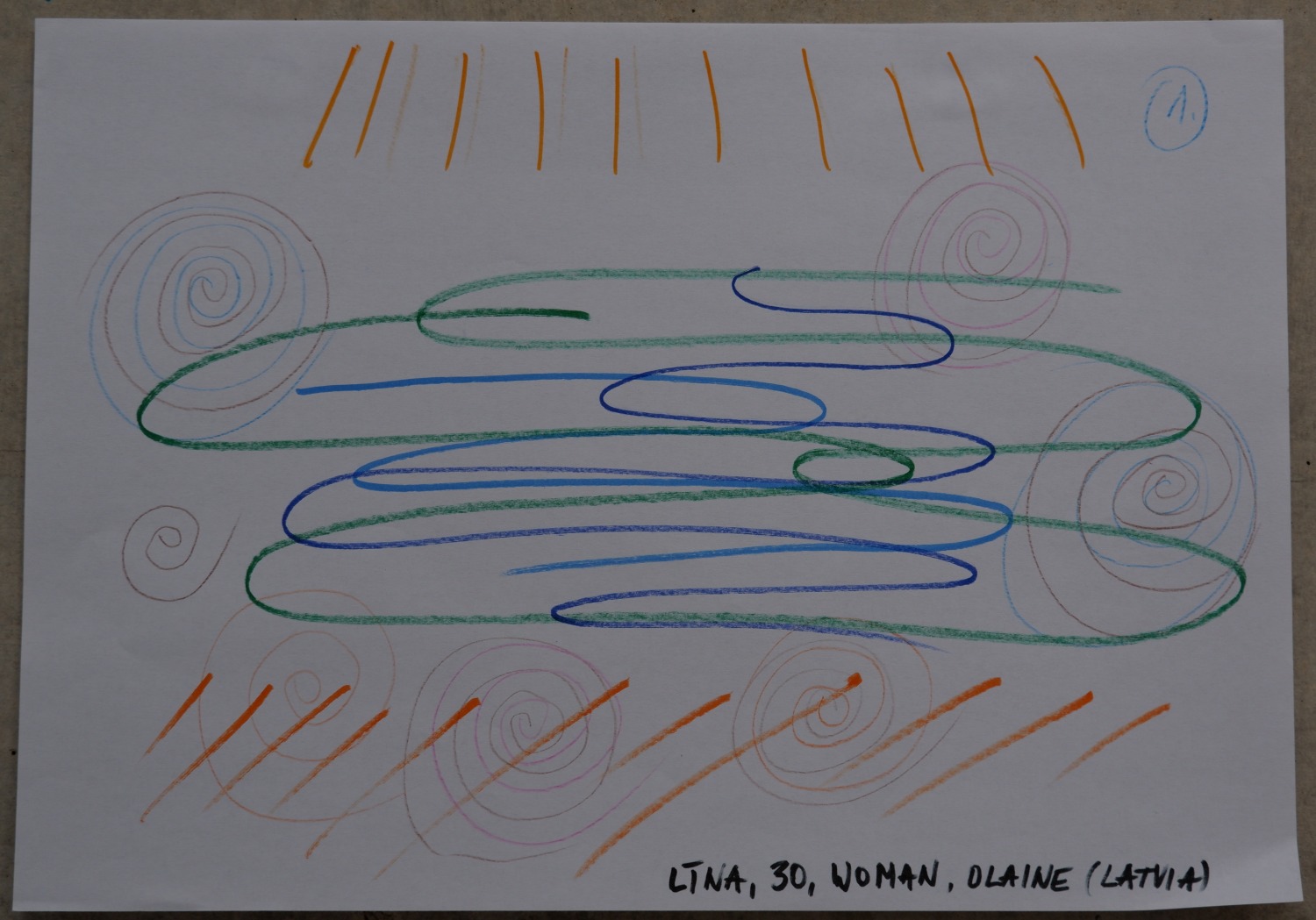
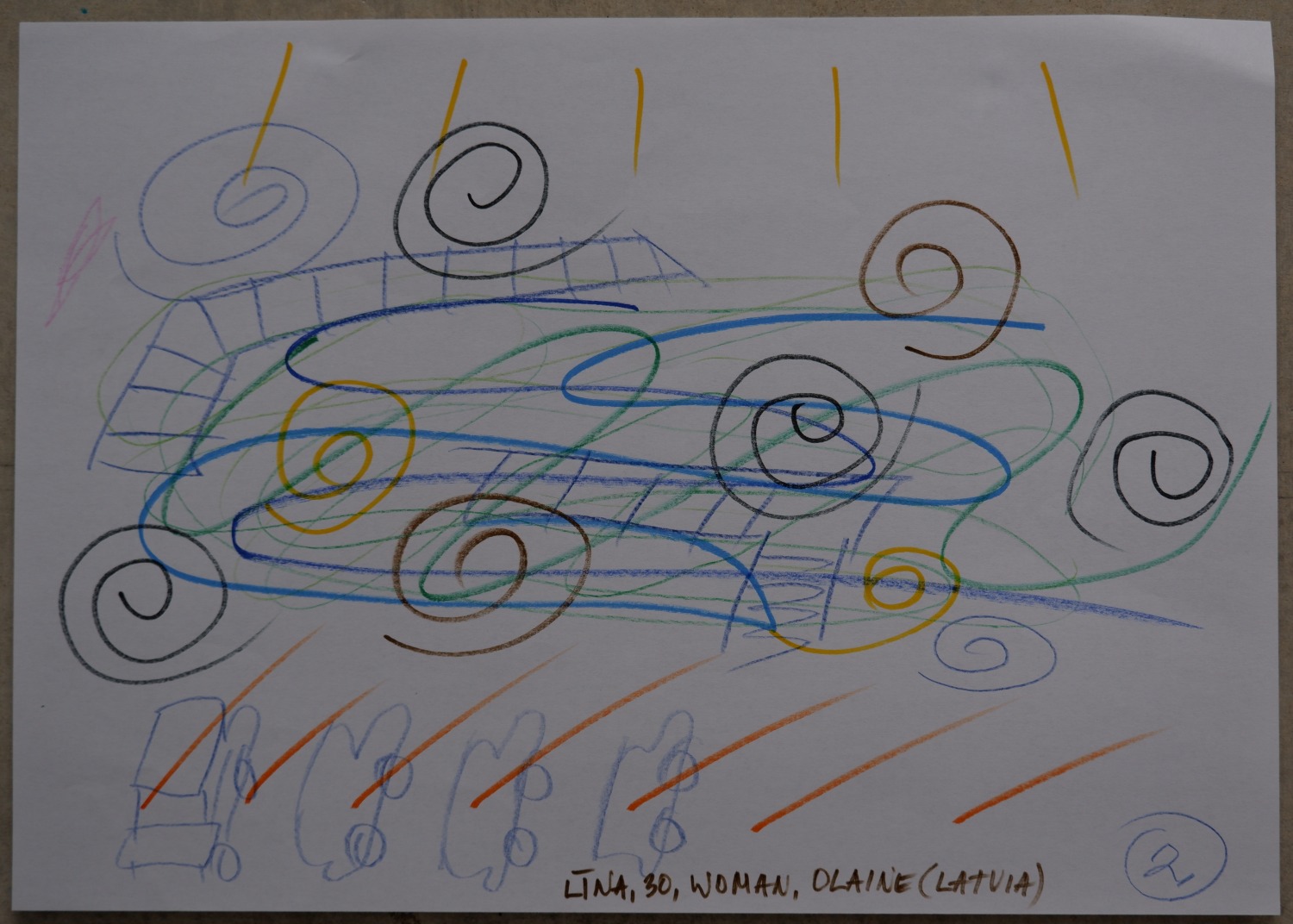
as remembered · approx. 2010–2015
“A quarry in my hometown, near Olaine. We used to go swimming there as teenagers — I’d ride out with friends on our bicycles, along a bike lane that took us through forests and meadows to get there. It made me feel independent, free, adventurous — a little anxious when I went with boys. All that riding and swimming made me feel strong. The place itself was undeveloped, empty, quiet.”
Drawing photographed for the archiveDrawn by Liisa — 25, woman, from Tartu, Estonia
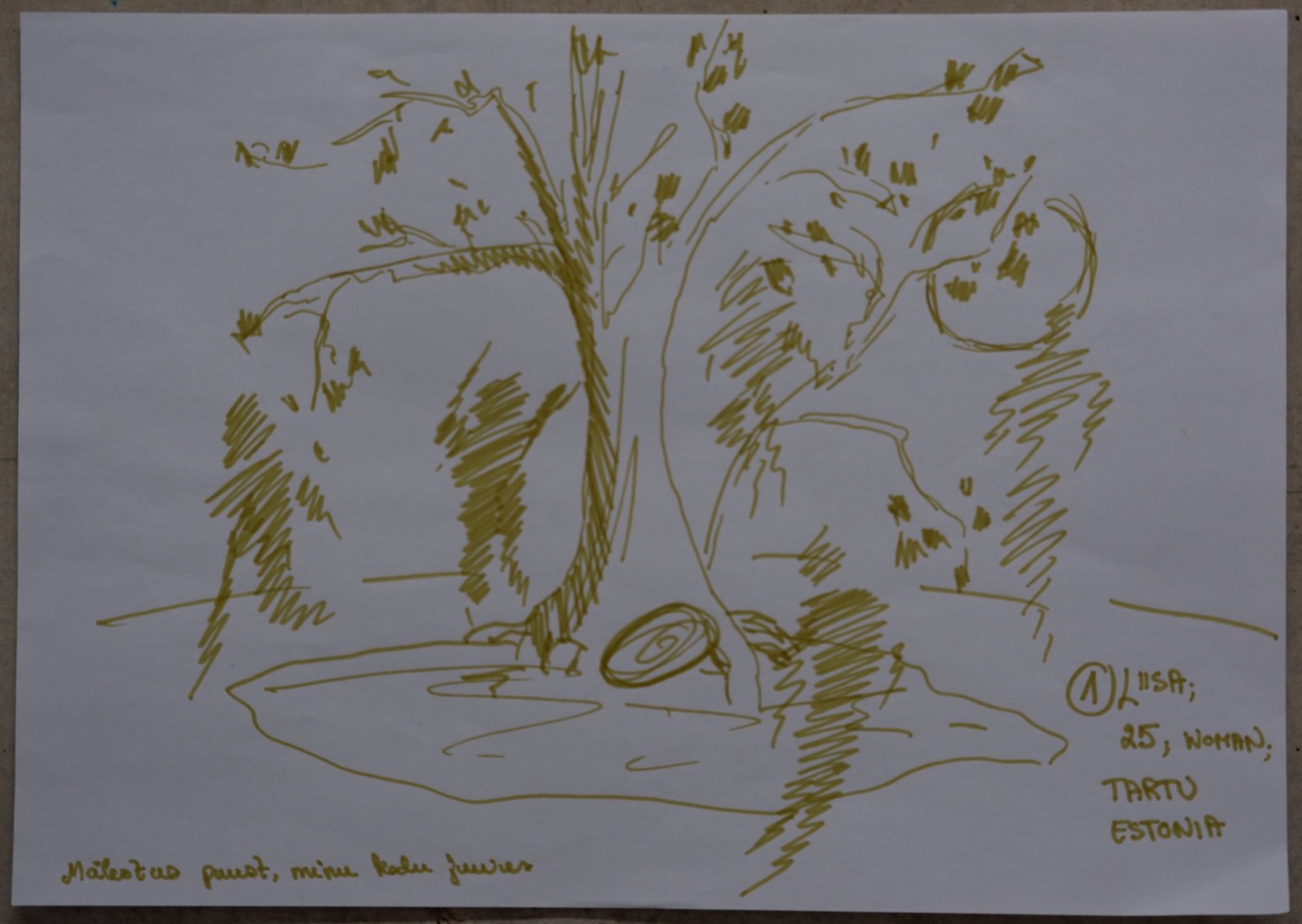
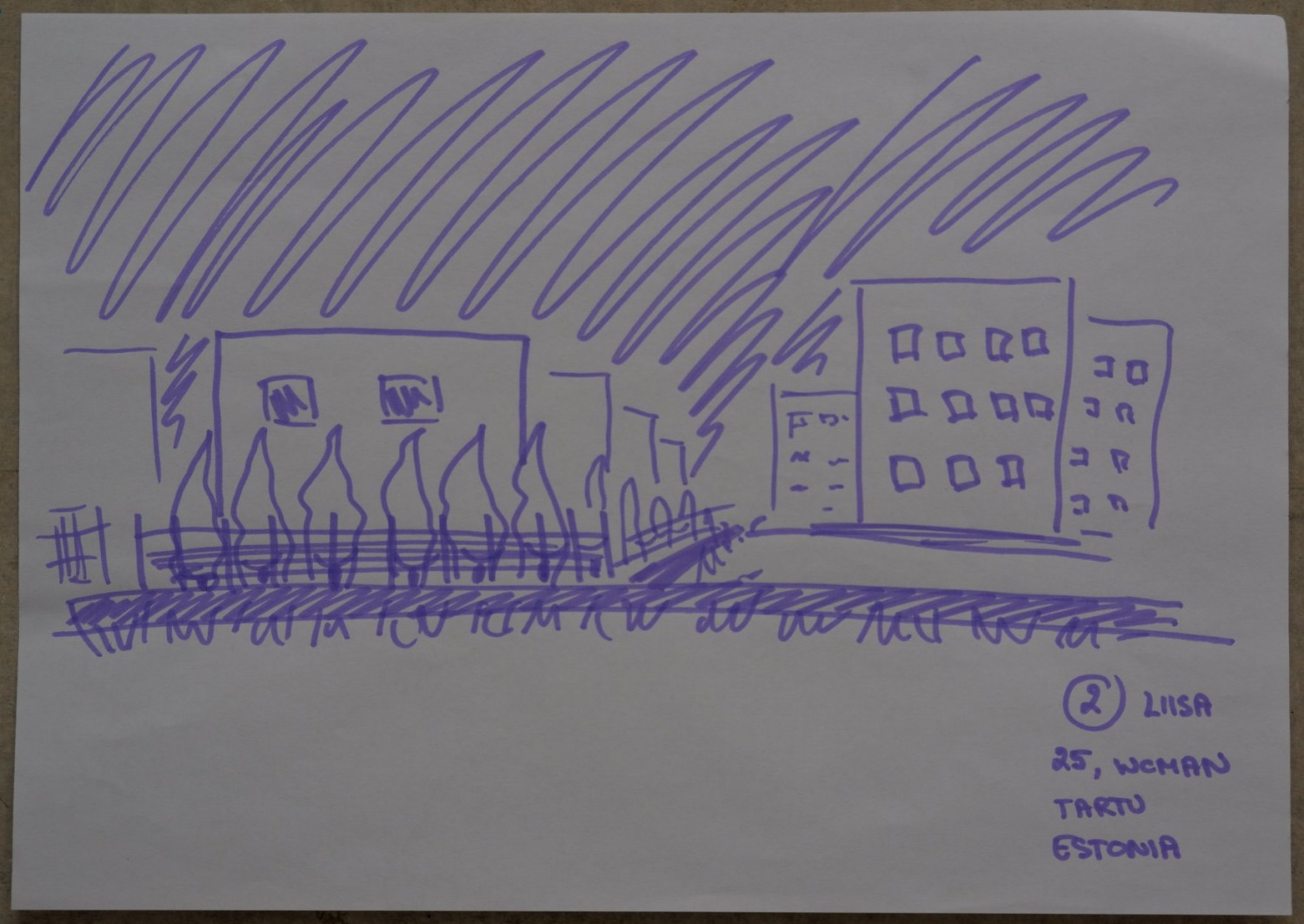
as remembered · 2011
“‘Mälestus puust, minu kodu juures’ — ‘A memory of a tree, near my home.’ A willow tree near my childhood home. I used to play there with my best friend at the time — we pretended it was a tiny island of our own. It was tucked inside a bush, and playing there felt like such an adventure. We were around 10, and the year was probably 2011 or so. We went there every day. It was so much fun!”
Drawing photographed for the archiveDrawn by Relja — 37, from Belgrade, Serbia

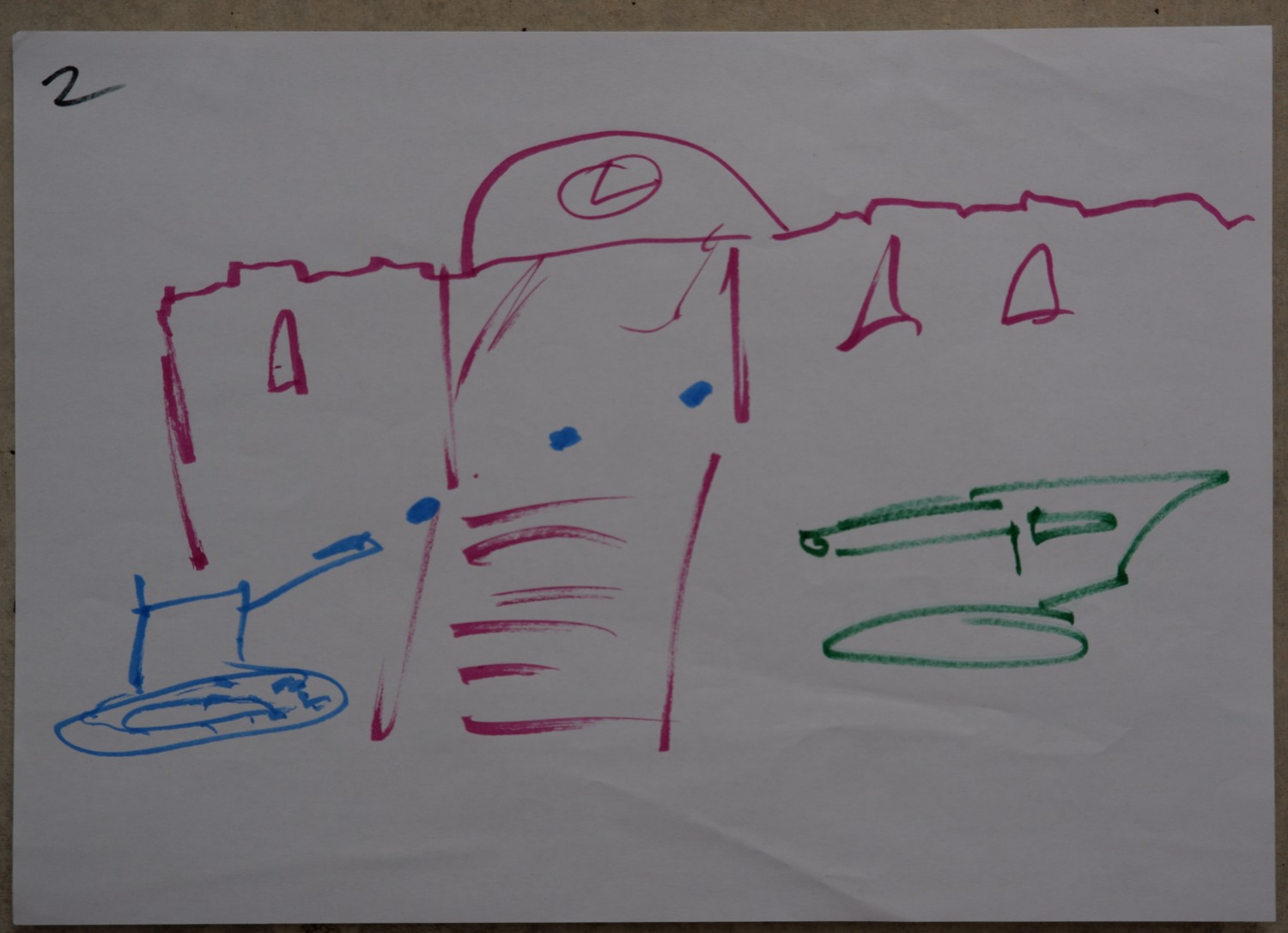
as remembered · 1998
“It’s the old fortress. I was playing with my relatives — we played among old German and Yugoslav tanks. I remember the smell of metal, oak, and grass, and it was always so sunny. We used to climb inside the tanks to play and hang out.”
Drawing photographed for the archiveDrawn by Saara Jaanisk — 23, woman, from Läänemaa, Estonia
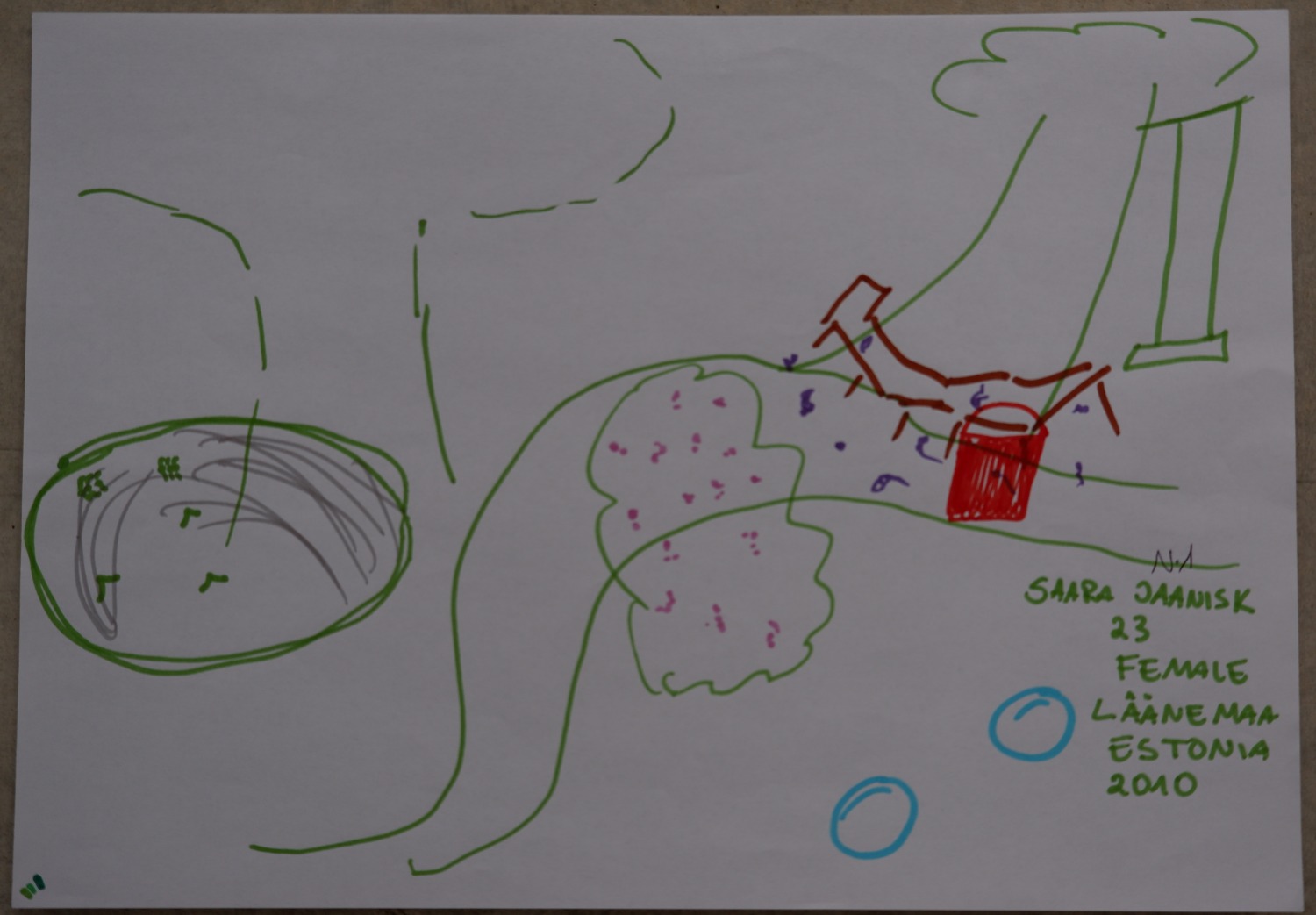
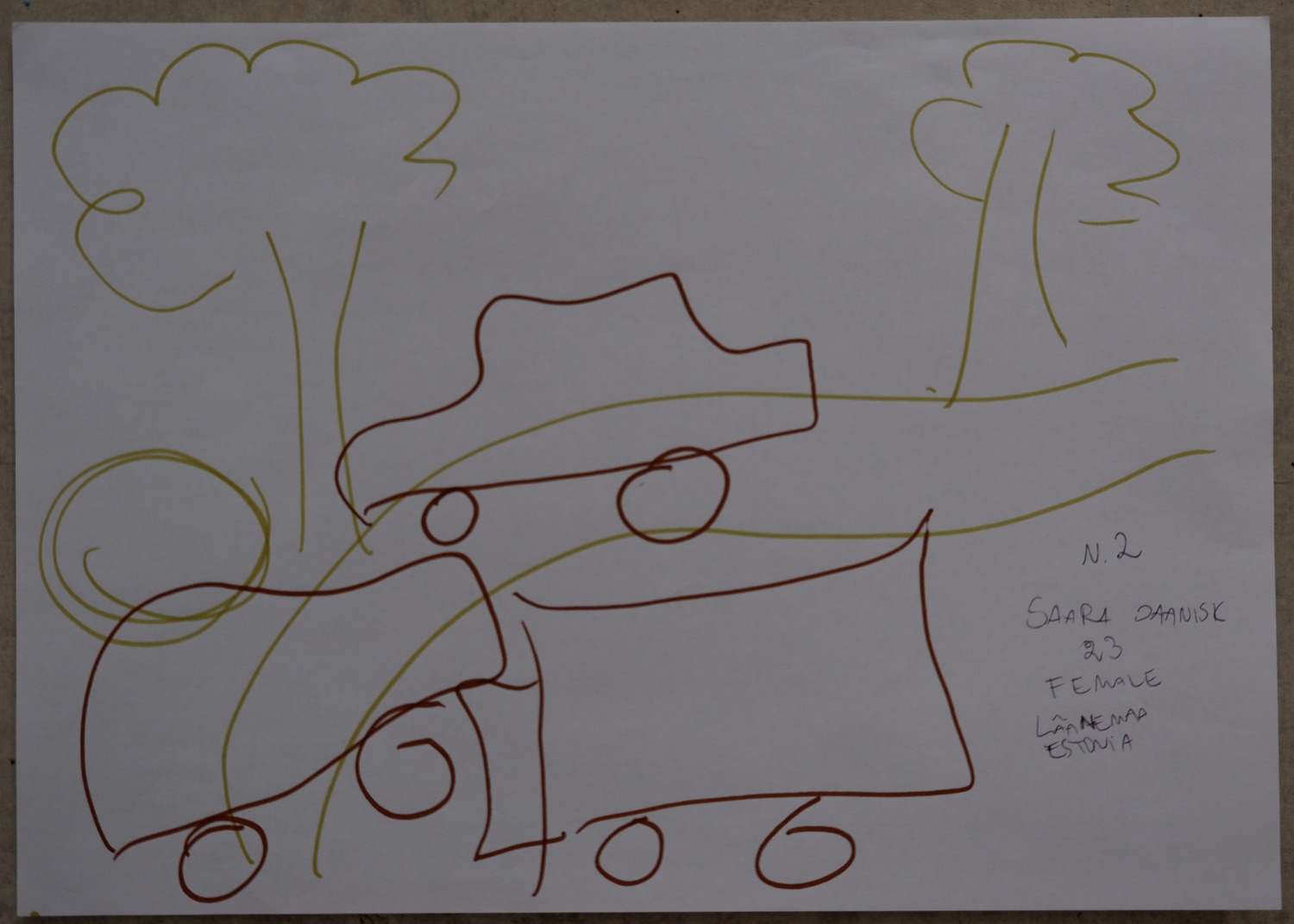
as remembered · 2010
“This is my grandparents’ place, on my father’s side, and it means a great deal of nature to me: the big rock, the oak trees, my grandmother sitting under the tree cleaning blackberries. I’d be on the rock, or swinging near her. But I could also hear my grandmother and grandfather yelling at each other. So it means encountering the world’s violence too.”
Drawing photographed for the archiveDrawn by Lachlan — 28, male, from Australia
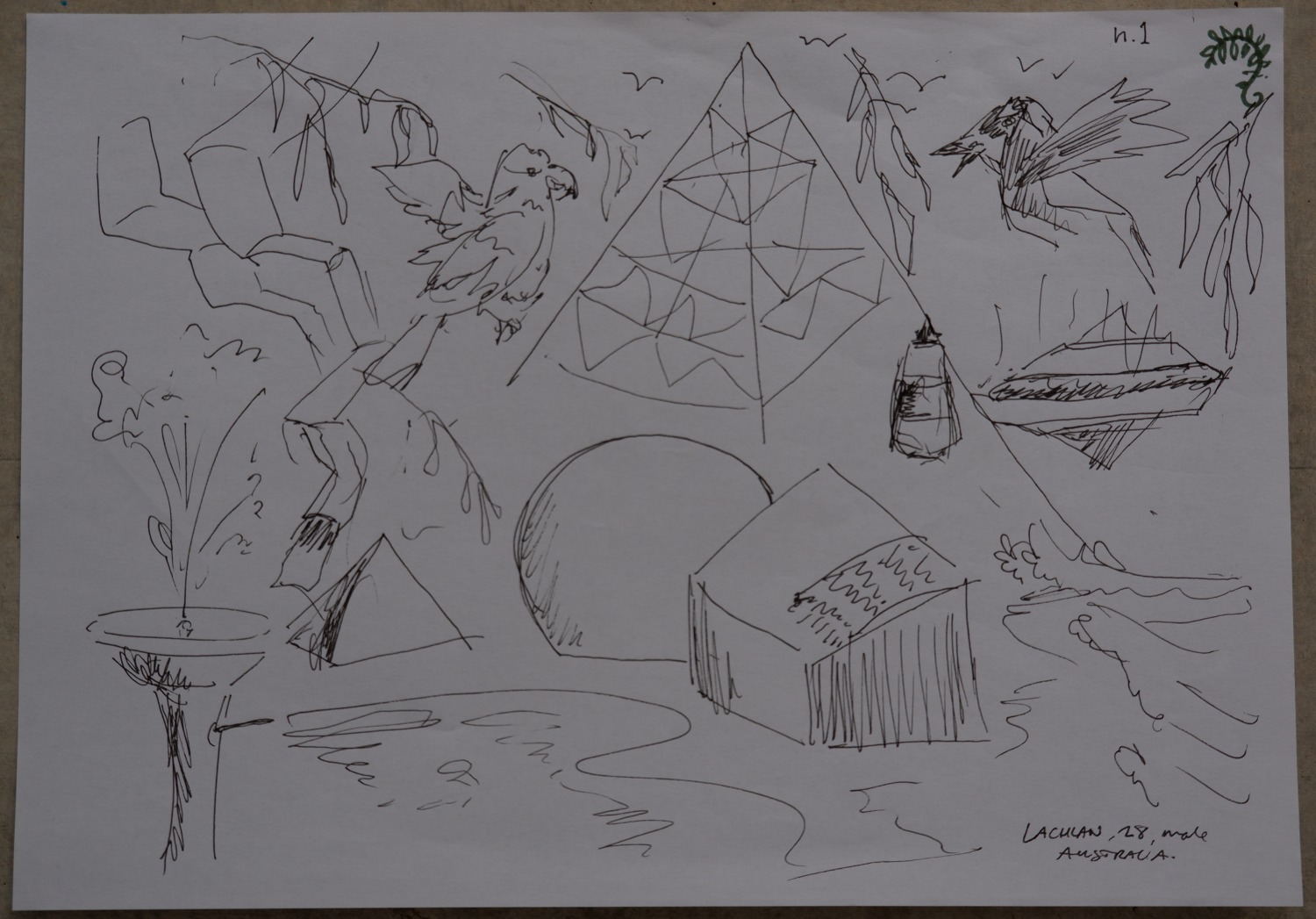
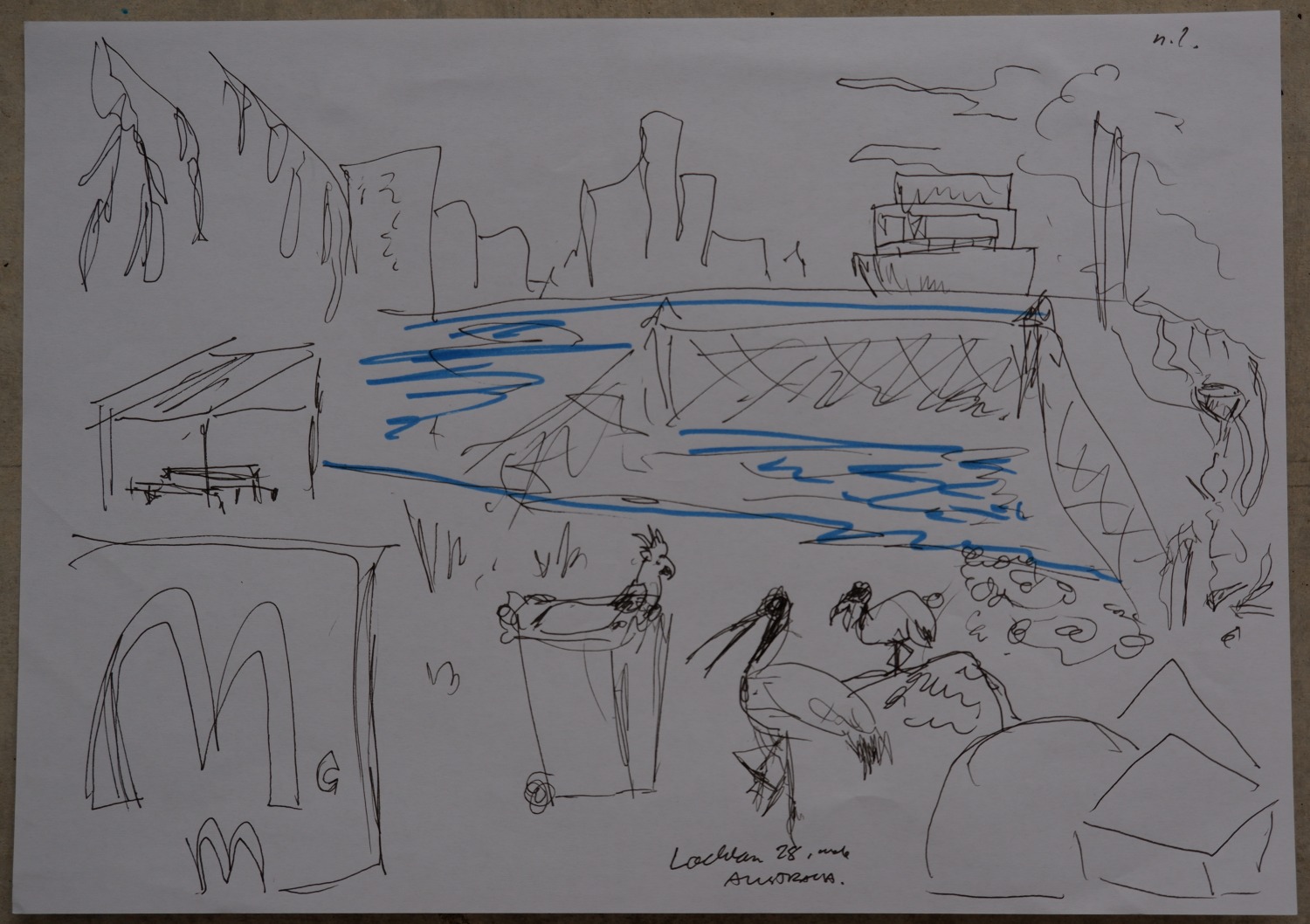
as remembered · 2005
“It represents my childhood and summer days that are very hot: the wading pool, sausage sizzles, kookaburras, and a metal slide that burnt me on the way down. I remember the bubbler spitting in my face and being really cold, and also the sounds of the street and the waves crashing along the shore because of the ferry.”
Drawing photographed for the archiveDrawn by Miklós — 39, man, from Budapest, Hungary
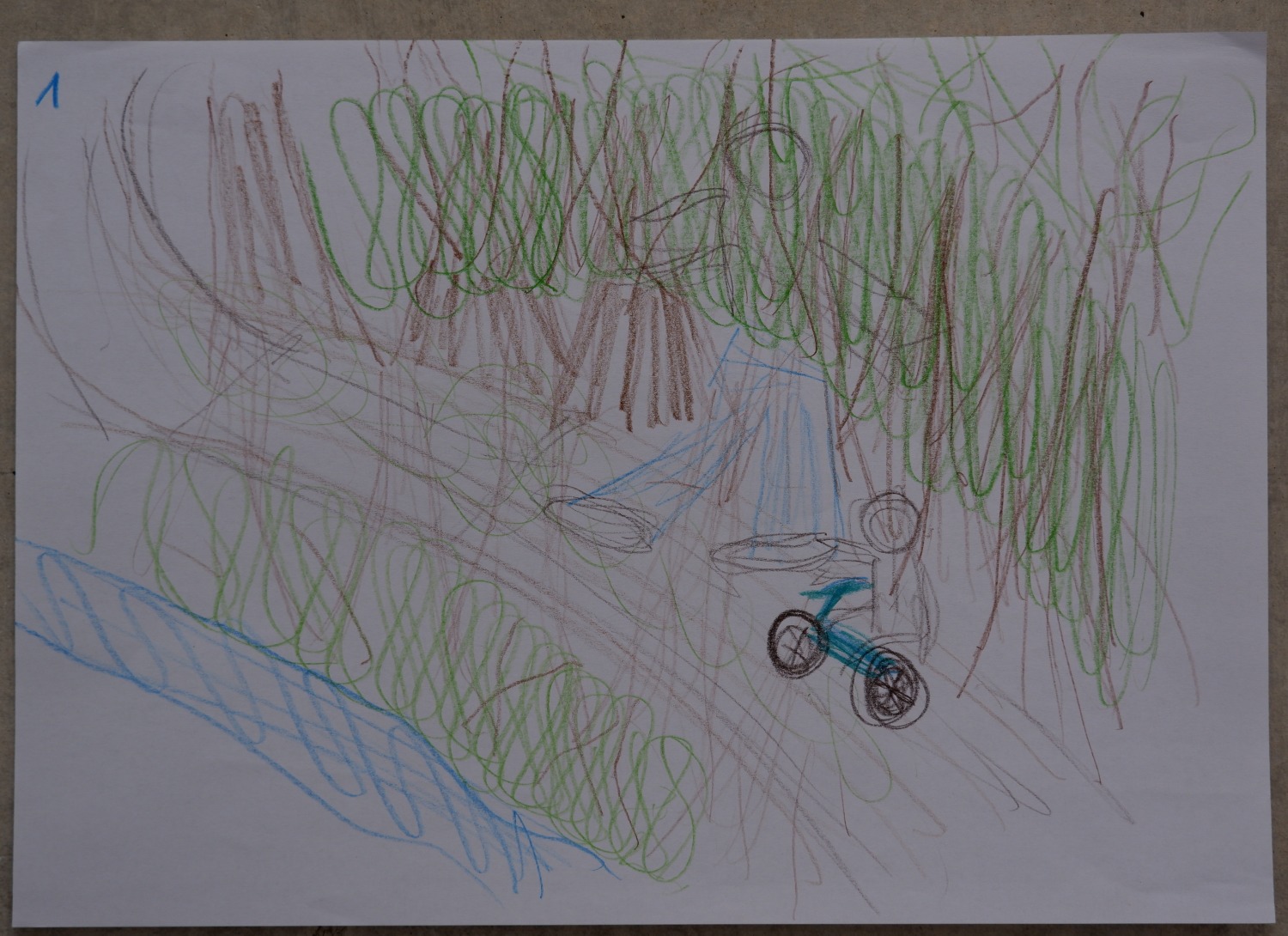
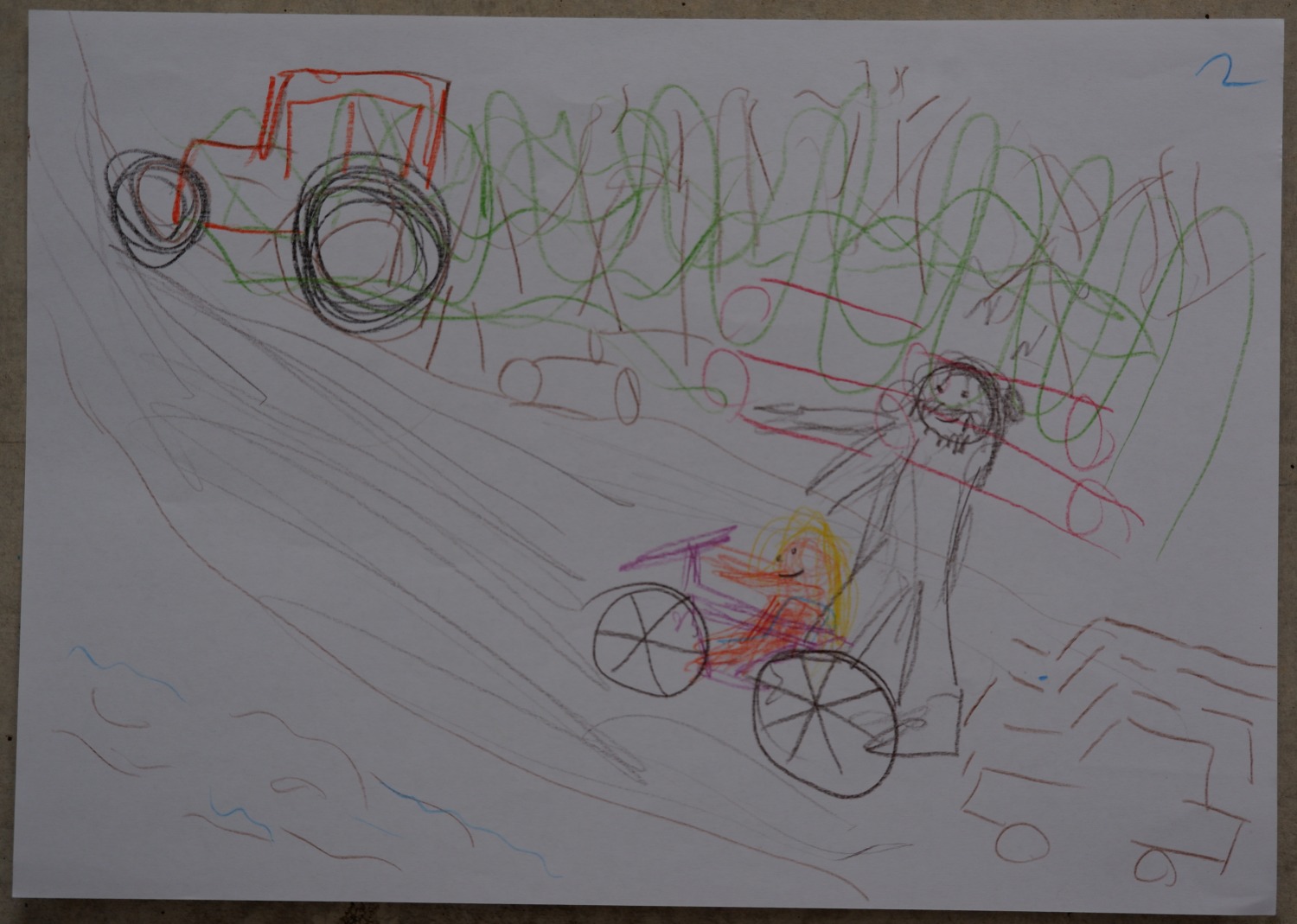
as remembered · childhood
“The forest near my home, where I grew up, and where we often went running with my dad, and with my first little bike. It was one of my favourite places — not too mysterious, but interesting enough that I was always happy to go.”
Drawing photographed for the archiveDrawn by Agnieška — 34, woman, from Lithuania
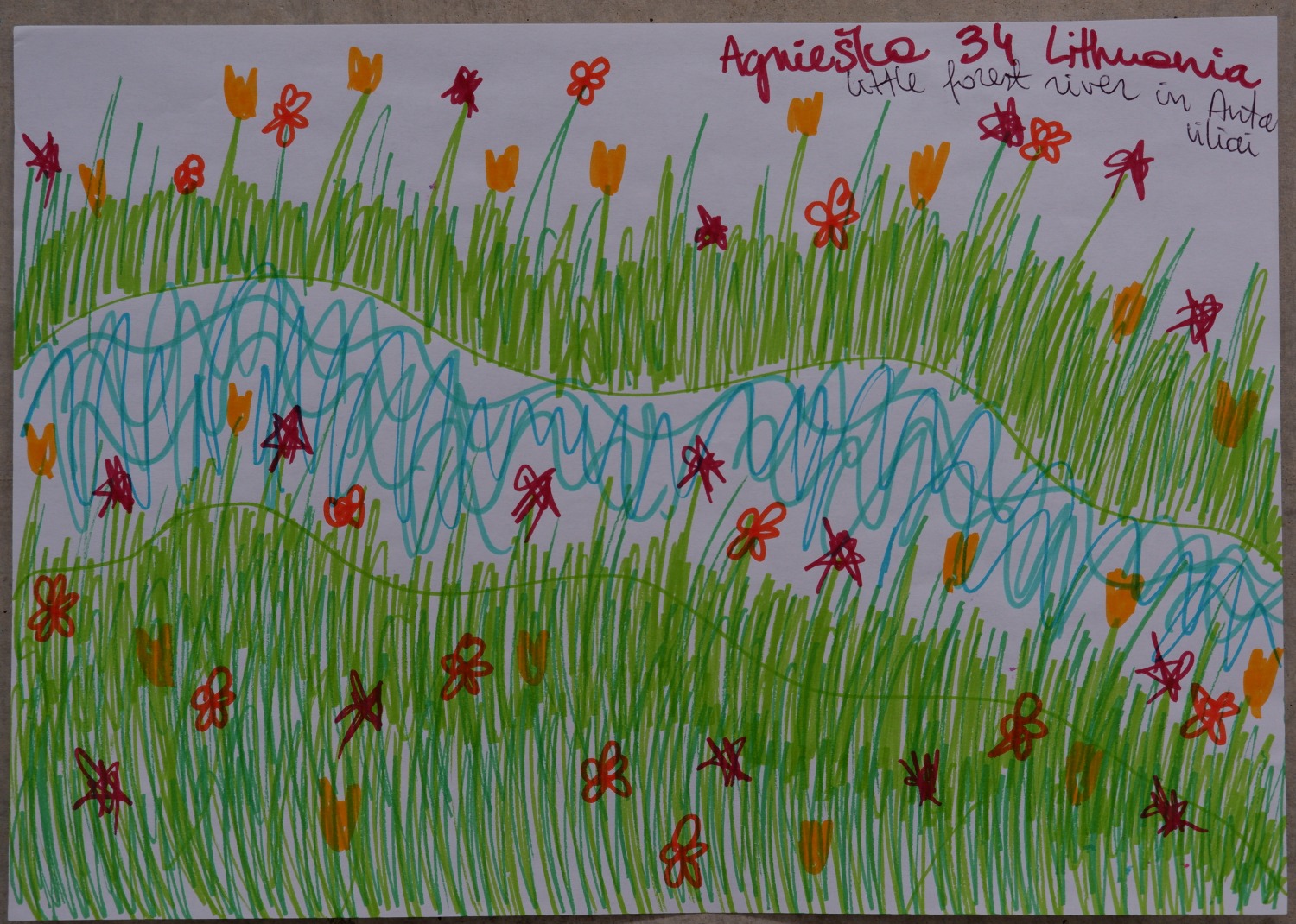

as remembered · 2002
“It was a time when I was happy, believing the world was safe and that miracles do happen — me, when I was eleven years old.”
Drawing photographed for the archiveDrawn by Polina — 25, woman, from Riga, Latvia

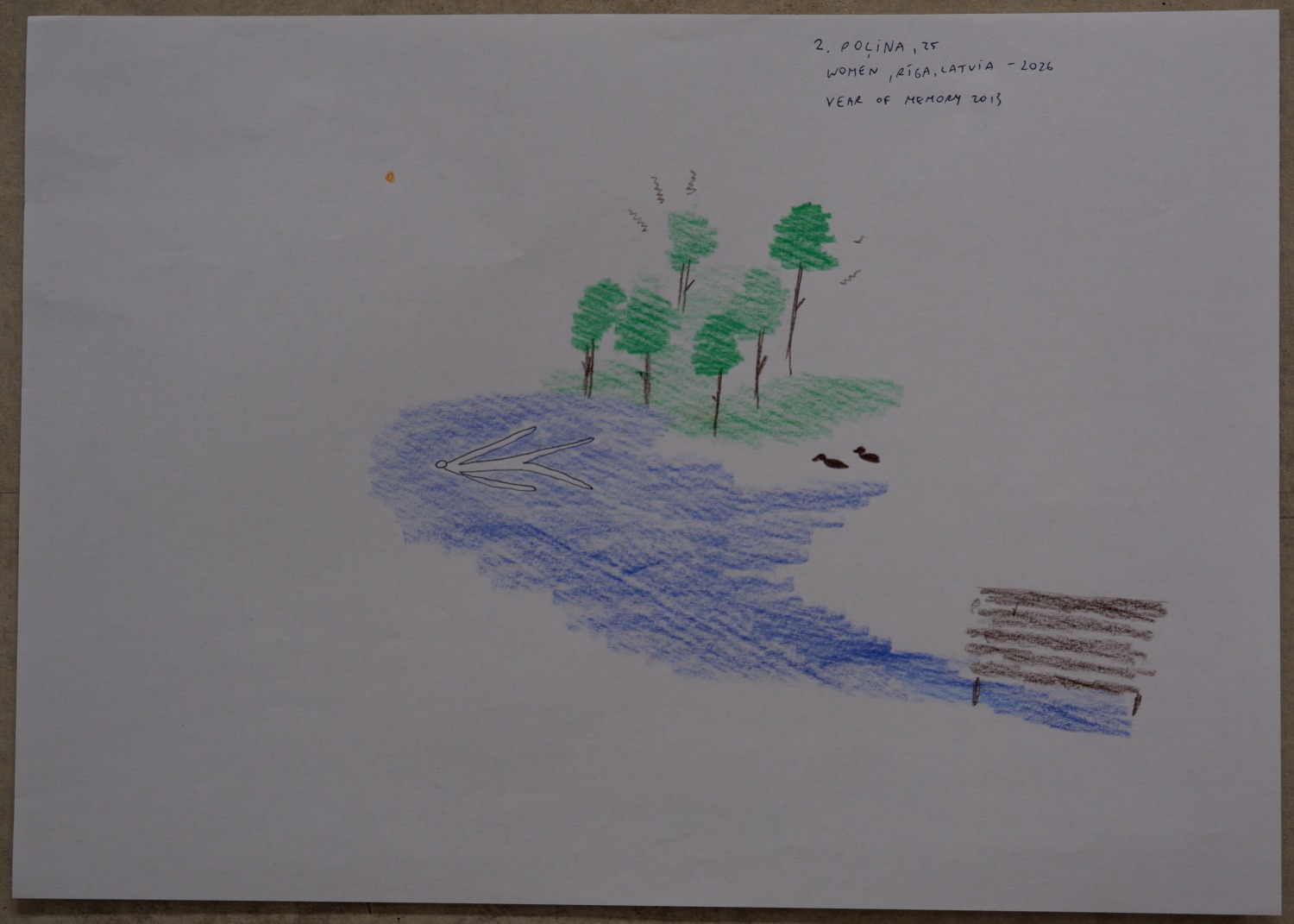
as remembered · 2013
“It’s a lake, two kilometres from where my grandmother lives. I used to spend summers there with my close childhood friend. I love swimming, and we spent hours in the refreshing water. There were sometimes snakes, and kids from the nearby camp.”
Drawing photographed for the archiveDrawn by Fátima — 34, woman, from Lima, Peru
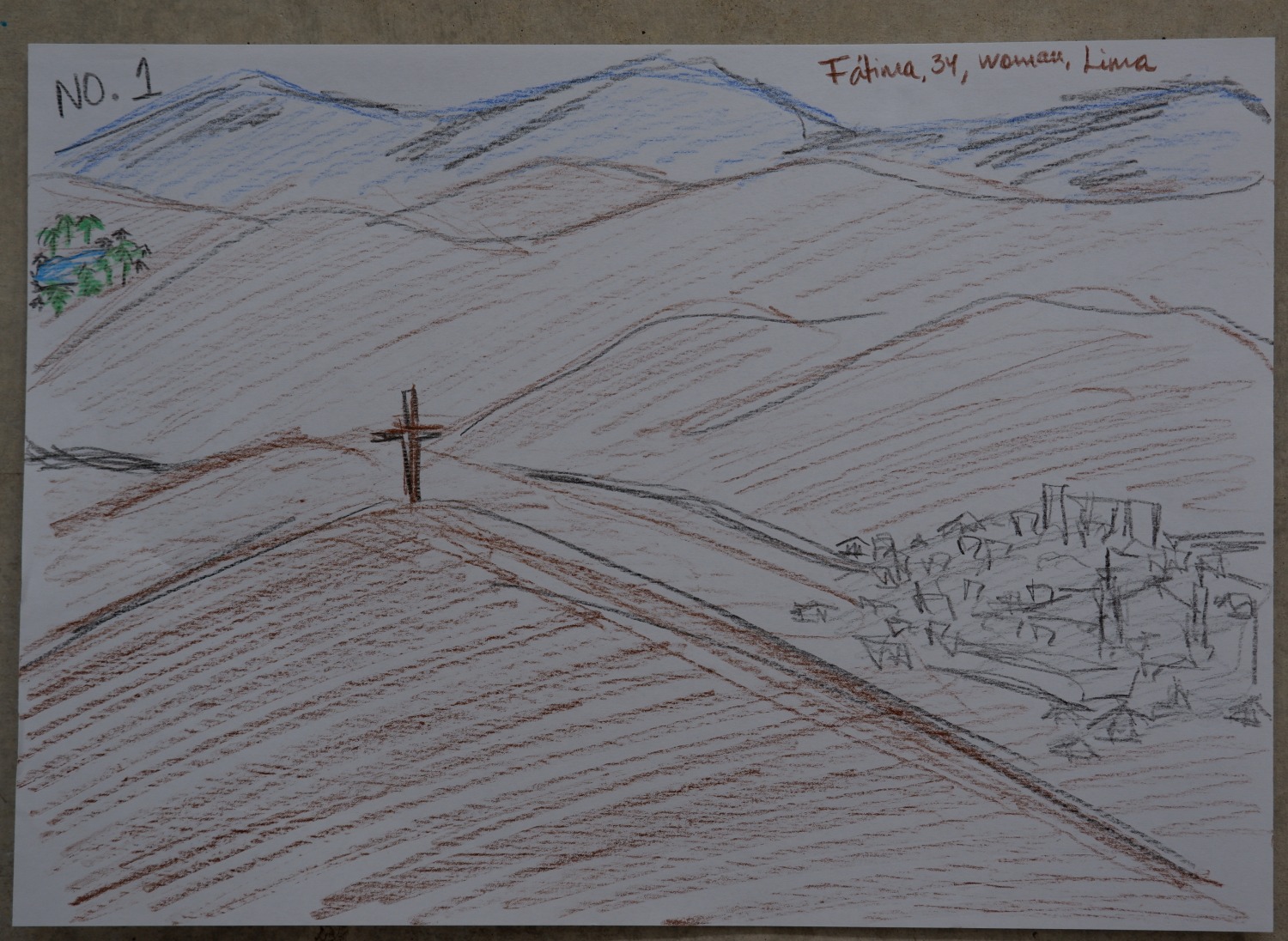

as remembered · 2007
“My mom’s hometown, where I would go all the time — sometimes only with my grandma — where all my family was. Summer, rest, holidays. I remember being on a floor, seeing everything, and also my view from atop the dunes.”
Drawing photographed for the archiveDrawn by Elvira Brinkmane-Pruze — 30, woman, from Riga, Latvia
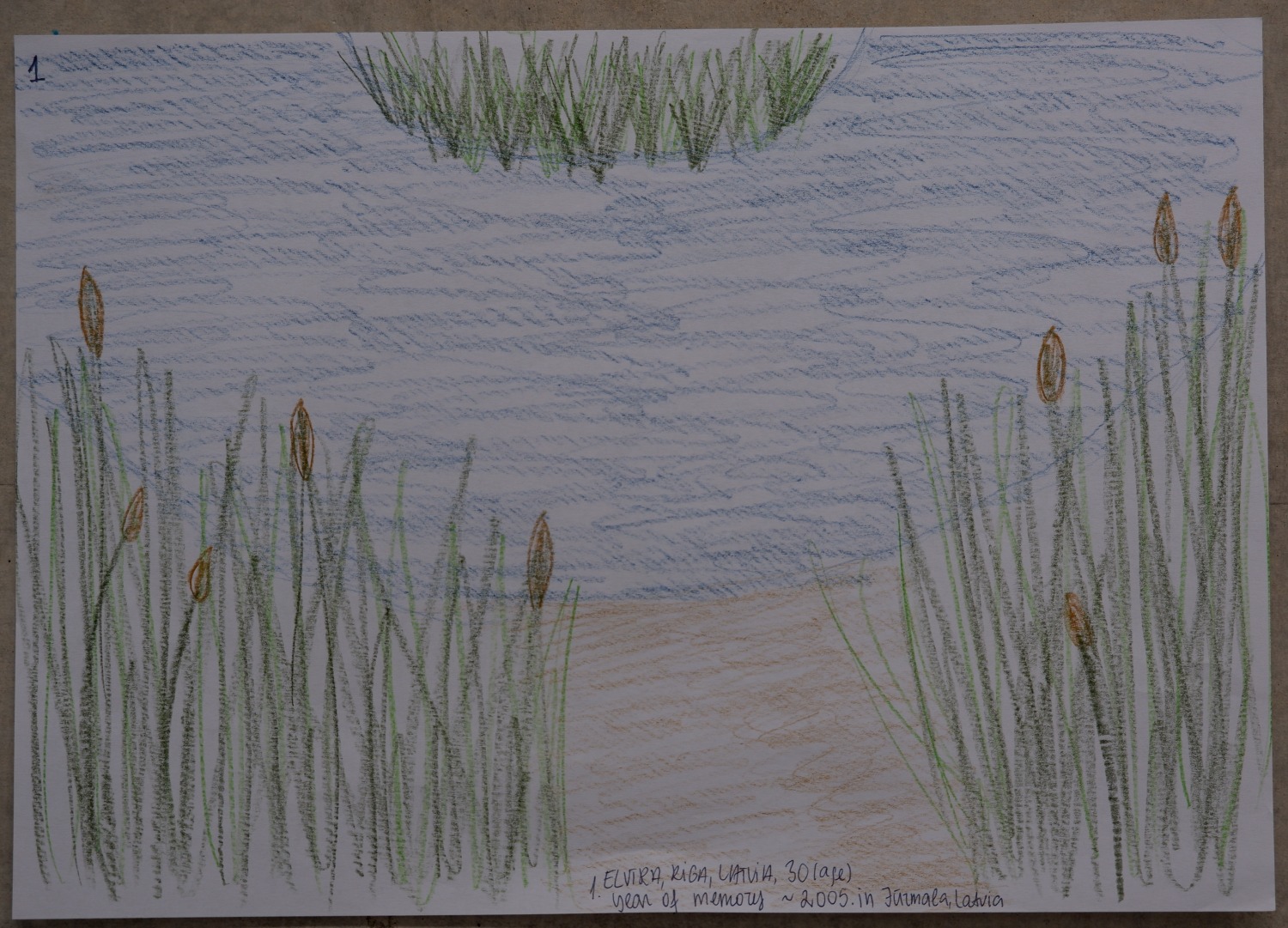
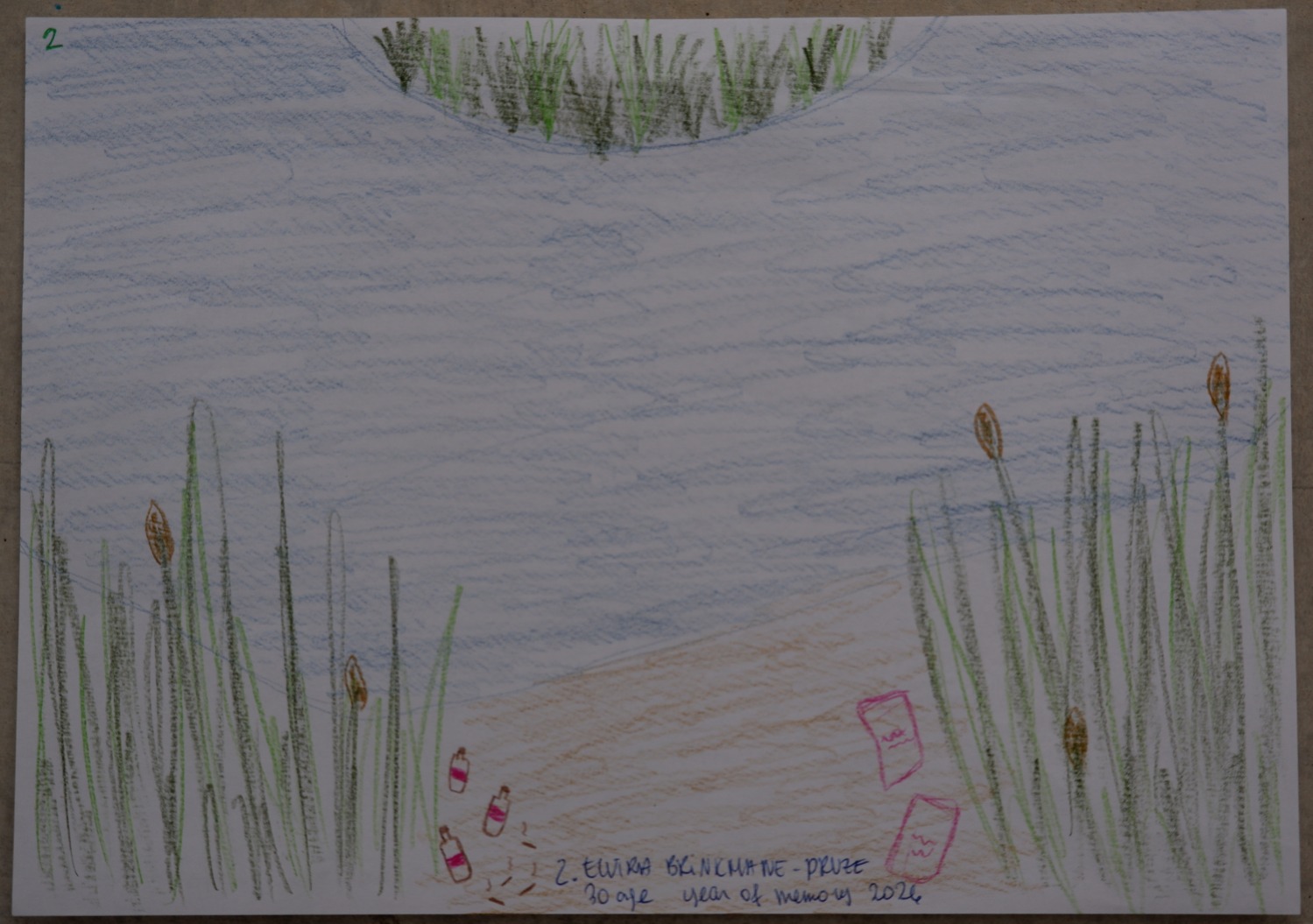
as remembered · 2005
“This is the river near where I grew up — Jūrmala, Latvia (Bulduri): the Lielupe. We went swimming there in summer and ice-skating in winter. It was a bit of a hidden place; only locals went there.”
Drawing photographed for the archiveDrawn by Martyna — 40, woman, from Vilnius, Lithuania
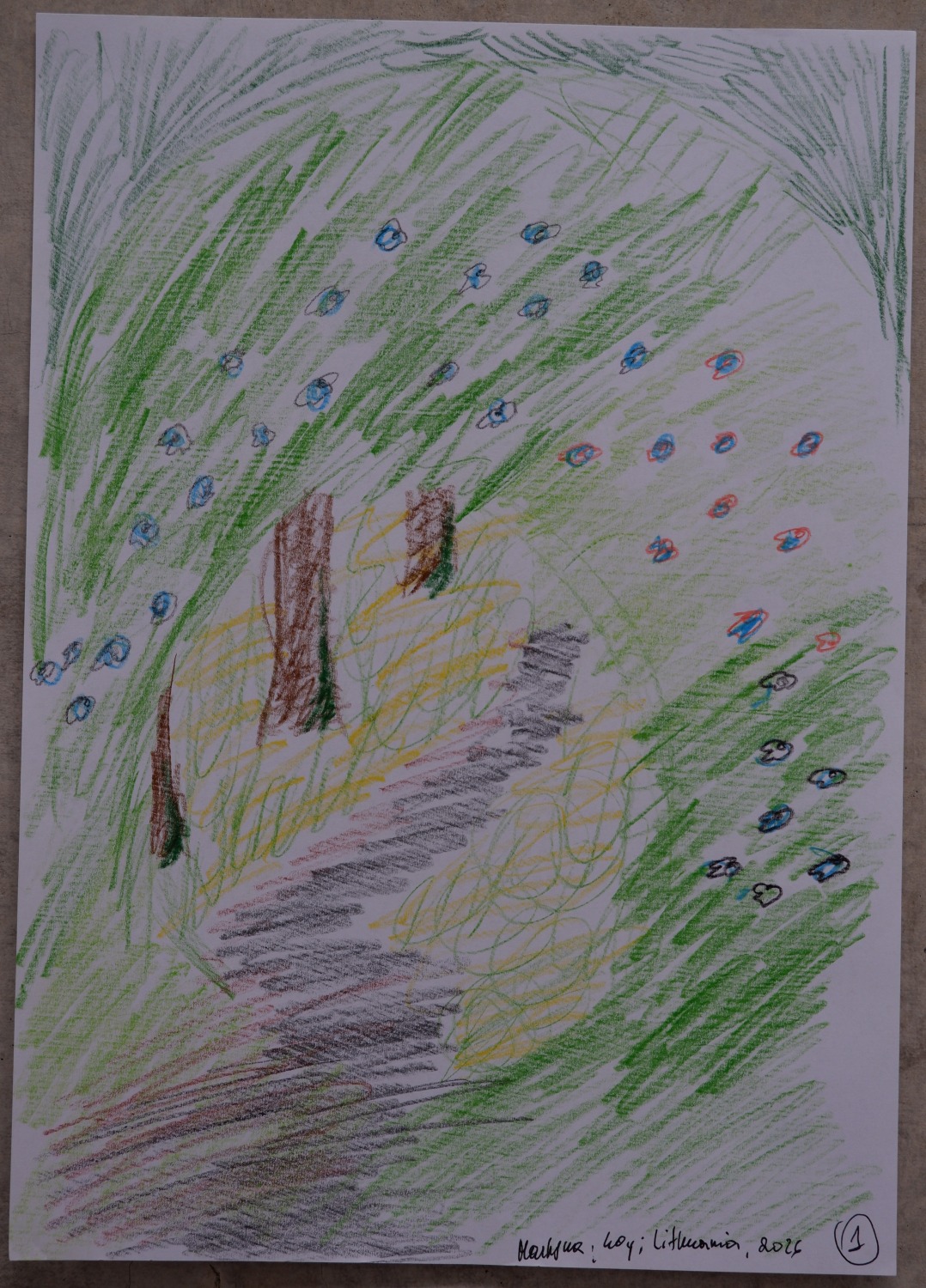
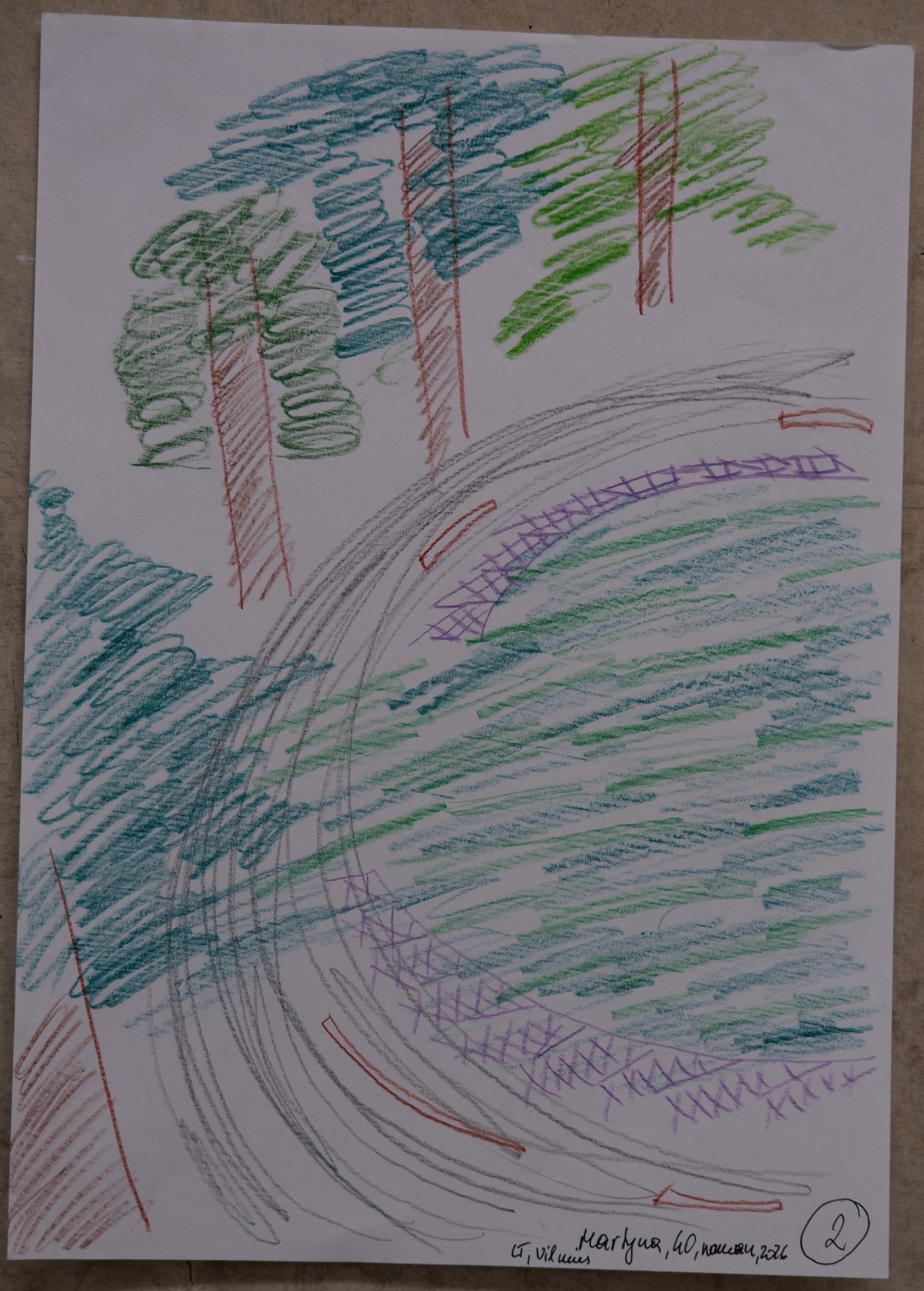
as remembered · her 20s
“I used to walk with my beloved Labrador along the pond-lake close to my childhood flat. I loved the tiny paths through overgrown bushes, where the miraculous beauty of the seasons could be discovered. A gate of ‘ievos’ flowers stuck in my memory.”
Drawing photographed for the archiveDrawn by Marija — 36, woman, from Belgrade, Serbia
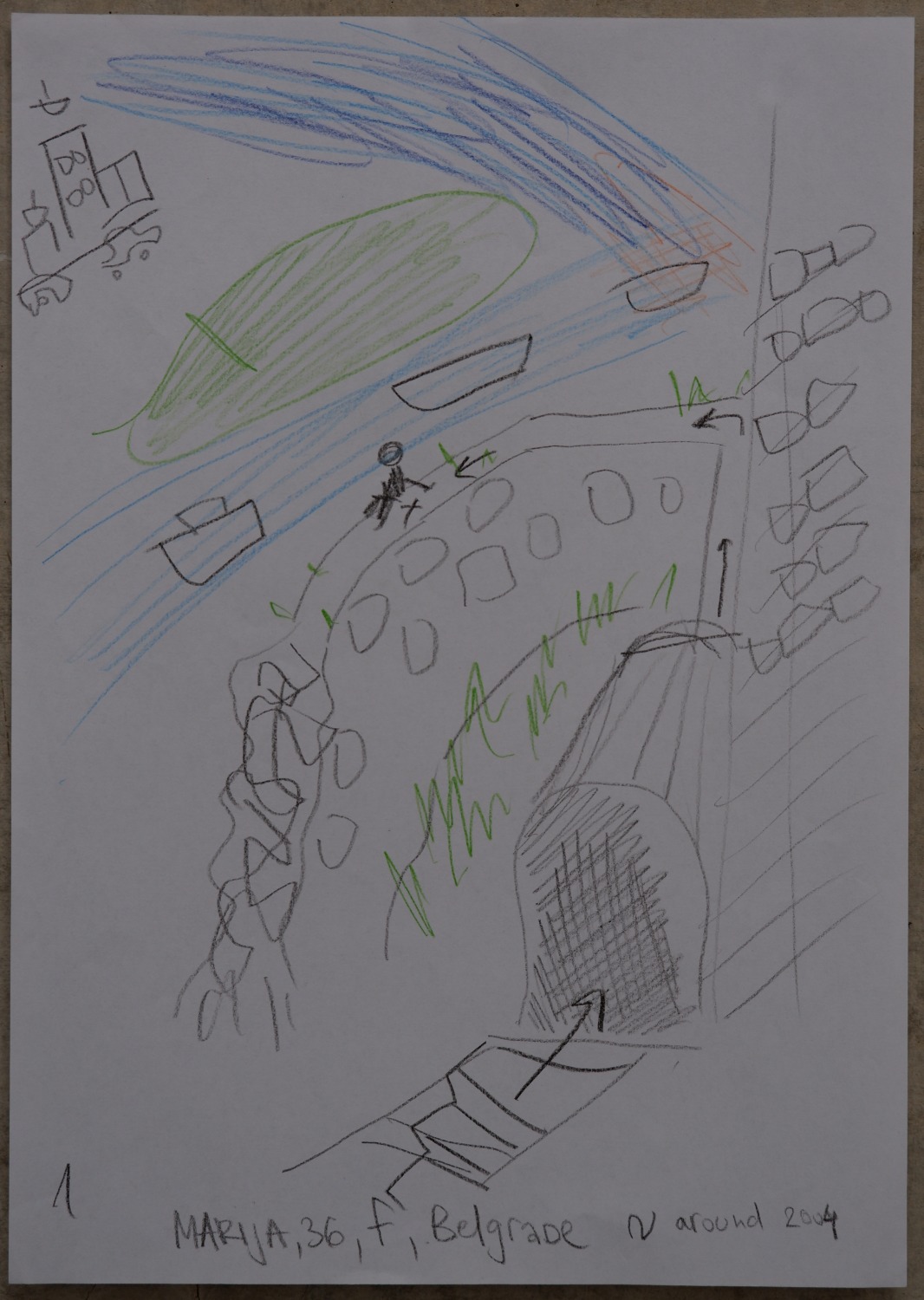
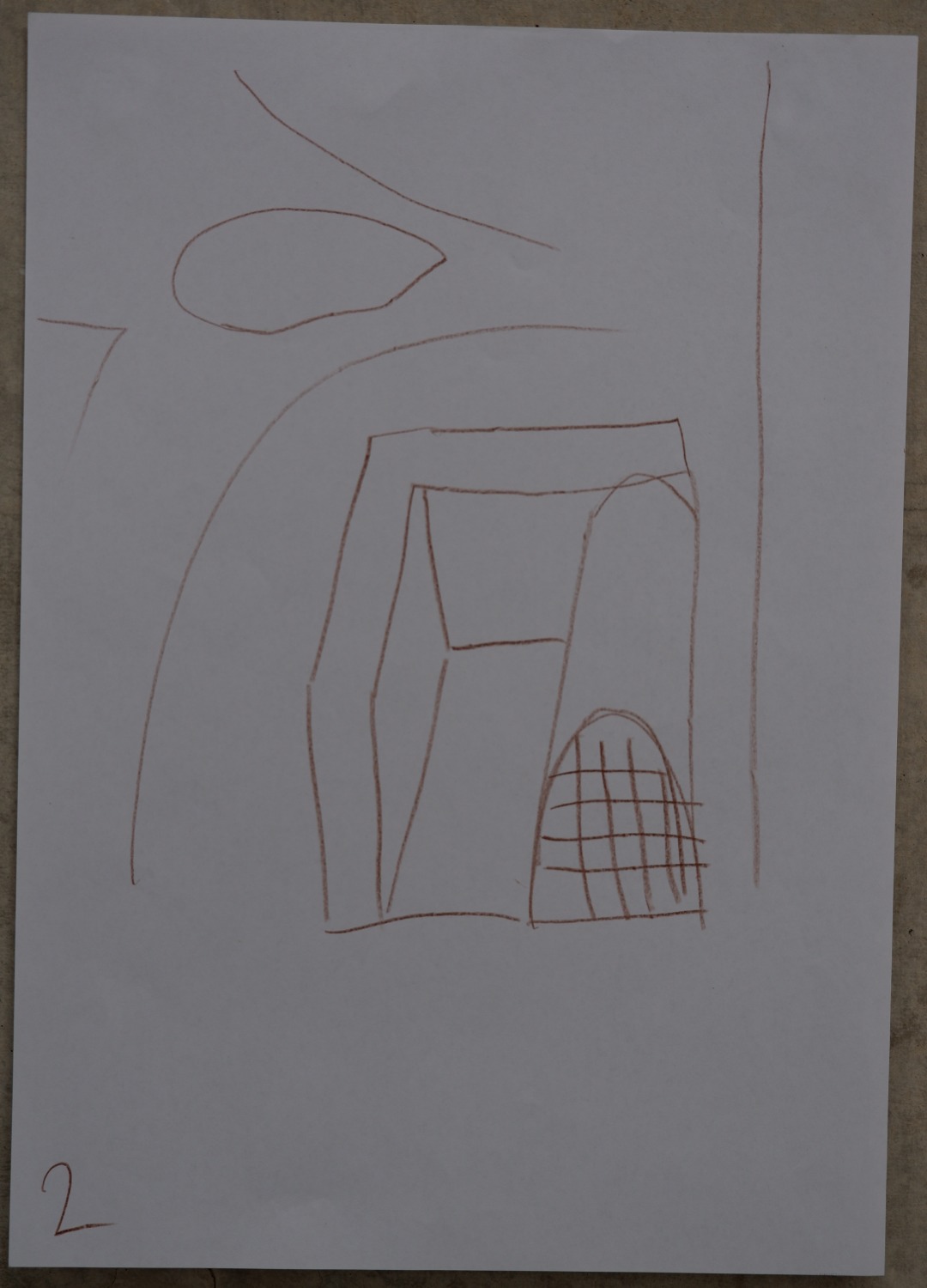
as remembered · around 2004
“This is part of a big park, Kalemegdan — a stretch of derelict wall that was very hard to access, and dangerous. I once even fell asleep there. It was in the middle of the city but completely detached; you could see the river confluence and the city beyond. I can’t access it anymore, because the tunnel is closed.”
Drawing photographed for the archiveWhere the memories come from
Twenty-eight drawings, mapped to where they were made. Click a pin to see who drew there. Scroll, or use the +/− controls, to zoom in.
Click a pin above to see who drew there, and what changed.
Home ground — Salento
- Olive groves & masserie
- Ionian & Adriatic coastline
- Dry-stone walls & karst
- Village squares
Elsewhere in the world
- Malupe, Latvia
- Ida-Virumaa, Estonia
- Olaine, Latvia
- Tartu, Estonia
- Belgrade, Serbia
- Läänemaa, Estonia
- Australia
- Budapest, Hungary
- Lithuania
- Limbaži, Latvia
- Ica, Peru
- Jūrmala, Latvia
- Vilnius, Lithuania
- Belgrade, Serbia (Kalemegdan)
A living, growing archive
The plan is for this to outgrow what any one fieldworker can collect alone. Once the first twenty-eight are in place, people who take part — anywhere — will be able to send in their own pair of drawings and the memory behind them, so the collection keeps widening the way the change it documents has.
Contribution is open now, to anyone, anywhere — the exercise and the form below are exactly what it asks of you.
How to take part
This is the exercise, exactly as it’s given in the field. It asks for two drawings, not one — the same place, then and now.
- 1
Before you drawClose your eyes and travel back to a natural, outdoor place from your hometown that you once loved — from childhood or adolescence. Try to relive it: what you see around you, what you hear, whether it’s noisy or quiet, what it smells like, who is with you (family, friends, birds, dogs, insects), whether it’s hot or cold. What year is it, and how old are you? What do you feel inside yourself right now — joy, fear, carefreeness, sadness, anguish, hope, anger, disgust, pride, anxiety, serenity? And what are you doing there — standing still, lying down, running, playing, walking?
- 2
Drawing n.1Draw the emotion of that place — not its postcard image.
- 3
Labeling n.1Write your name (real or invented), your age, your gender, and the place you come from. Underneath, write “n.1,” and then, in capital letters and by hand, the place you drew, what it means to you, and the year and location of the memory.
- 4
Before you draw againClose your eyes once more and return to that same place today. What do you see and hear around you now? Is it noisy or quiet, hot or cold, and who is with you? How old are you now, and what do you feel inside yourself this time? What are you doing in this place?
- 5
Drawing n.2Draw the emotion of that same place now — again, not its postcard image.
- 6
Labeling n.2Label it the same way as before, then write “n.2” underneath and describe, in your own words and in as much detail as you can, what the place means to you now and what has changed.
Send your pair
Once you have your two drawings and their labels, send them straight to Lucya by email — there’s no form to fill in here.
Attach both photos (n.1 and n.2), and include your name (real or invented), age, gender, the place, country, and year of the memory, plus what each drawing means to you — then and now. The button below opens your email app with a template for all of that already filled in; just add your answers and attach the photos before sending.
Email your submissionIf that button doesn’t open your email app, you can just write to lucya@tlu.ee directly.